Bhutan Off the Beaten Path: 10 Places Most Travelers Miss
When most travelers think about a trip to Bhutan, they picture Tiger’s Nest Monastery, Punakha Dzong, Thimphu, and the beautiful valleys of western Bhutan.
These places deserve their reputation. But there is another side of Bhutan waiting beyond the country’s best-known attractions.
From quiet mountain valleys and remote villages to traditional weaving communities and the highlands of eastern Bhutan, Bhutan off the beaten path offers a deeper and more authentic way to experience the Kingdom.
If you want to travel beyond the usual Bhutan itinerary, discover places where life moves at a slower pace, meet local communities, explore lesser-known cultural sites, and experience landscapes that few international travelers reach, these destinations are worth adding to your journey.
Here are some of the best hidden places in Bhutan and lesser-known destinations to consider for your next Bhutan adventure.
1. Haa Valley – A Peaceful Hidden Gem in Western Bhutan
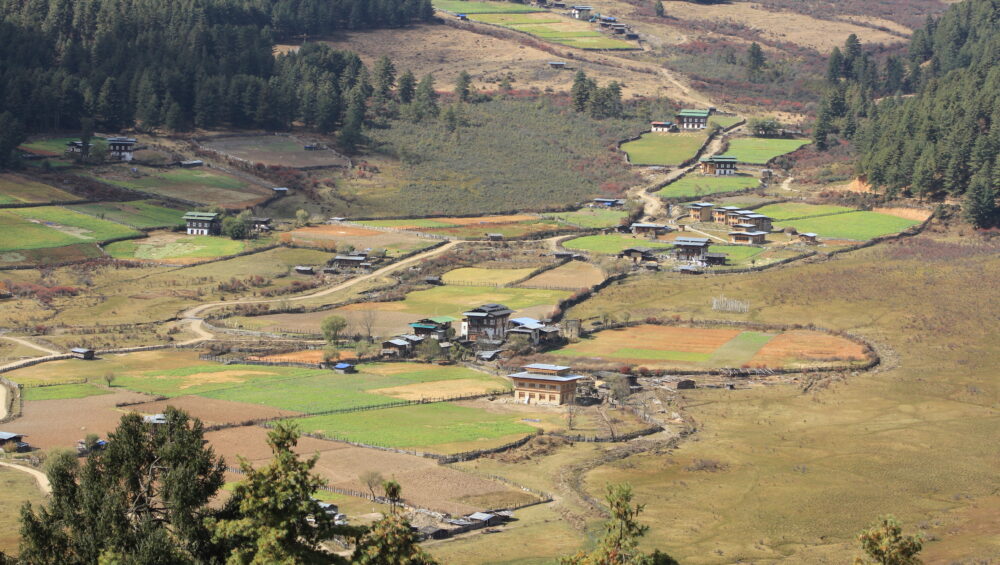
Located close to the western border of Bhutan, Haa Valley is one of the country’s quieter destinations.
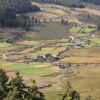
Surrounded by forested mountains and traditional villages, Haa offers a peaceful alternative to the busier sightseeing routes around Paro and Thimphu.
Travelers can explore traditional temples, walk through villages, enjoy mountain scenery, and experience a slower side of Bhutanese life.
The journey to Haa can also take you across Chele La Pass, one of the highest motorable passes in Bhutan, where clear weather can reveal spectacular Himalayan views.
For travelers searching for hidden gems in Bhutan, Haa Valley is an excellent place to begin.
Explore our Haa Valley destination guide to learn more about what to see and do in this beautiful valley.
2. Trongsa – Where Bhutan’s History Comes Alive
Traveling east from Punakha brings you to Trongsa, a dramatic mountain district located in central Bhutan.
The landscape changes quickly here. Roads wind through high mountain passes and steep valleys before reaching the impressive Trongsa Dzong.
Trongsa has long been strategically important in Bhutan’s history. The enormous dzong seems to rise directly from the mountainside, overlooking the valley below.
Beyond the fortress, the journey through Trongsa reveals rural landscapes, traditional farms, mountain villages, and peaceful roads where you can experience Bhutan away from the country’s major tourist centers.
For travelers interested in authentic Bhutan travel, Trongsa is more than a stop between western and central Bhutan. It is a destination in its own right.
3. Bumthang – Bhutan’s Spiritual Heartland
Bumthang is better known than some of the destinations on this list, but it remains an essential stop for travelers who want to experience the cultural and spiritual depth of Bhutan.
The region is made up of beautiful valleys including Chumey, Choekhor, Tang, and Ura.
Ancient temples and monasteries are scattered throughout the landscape, including Jambay Lhakhang, Kurjey Lhakhang, and Jakar Dzong.
But what makes Bumthang special is not simply the monuments.
It is the combination of sacred sites, traditional villages, farmland, local crafts, and peaceful mountain scenery.
Travel slowly through the valleys and you begin to see a side of Bhutan that cannot be experienced by rushing from one major attraction to another.
Bumthang is particularly rewarding for travelers interested in Bhutan cultural tours, photography, spirituality, traditional crafts, and rural experiences.
4. Lhuentse – Discover Bhutan’s Traditional Weaving Heritage
Far in eastern Bhutan, Lhuentse is one of the country’s most rewarding destinations for travelers looking for somewhere genuinely different.
The district is known for its dramatic landscapes, traditional culture, and exceptional textile traditions.
One of the highlights is Khoma Village, where visitors can see traditional Bhutanese weaving and learn more about the craftsmanship that has been passed down through generations.
Lhuentse also offers a very different landscape from western Bhutan, with winding mountain roads, forests, rivers, cliffs, and remote settlements.
For travelers interested in lesser-known places in Bhutan, Lhuentse is an opportunity to slow down and experience a region that receives far fewer visitors than Paro or Thimphu.
5. Trashiyangtse – Traditional Arts, Villages and Quiet Valleys
Continue farther east and you reach Trashiyangtse, a peaceful district surrounded by mountains and green valleys.
Trashiyangtse is particularly interesting for travelers who want to explore Bhutanese craftsmanship and traditional culture.
The district is home to Chorten Kora, Trashiyangtse Dzong, Rigsum Goemba, and the Institute of Zorig Chusum, where traditional Bhutanese arts and crafts are preserved.
The region is also associated with woodcraft, including the making of traditional wooden bowls.
Nearby villages and rural landscapes provide opportunities to see everyday Bhutanese life away from the main tourist route.
If your idea of a great holiday is discovering places rather than simply checking attractions off a list, Trashiyangtse deserves a place on your Bhutan off the beaten path itinerary.
You can also explore our Trashiyangtse destination guide for more information.
6. Merak and Sakteng – Into the Remote Eastern Highlands
Few experiences in Bhutan feel as remote as traveling toward Merak and Sakteng.
Located in eastern Bhutan, these highland communities are associated with the semi-nomadic Brokpa people, whose traditional lifestyle has been closely connected with yak herding and the surrounding mountains.
The journey itself is part of the experience.
Instead of simply arriving at another sightseeing destination, travelers enter a landscape of high mountain passes, remote villages, forests, and open Himalayan scenery.
Merak and Sakteng are ideal for travelers who want cultural immersion and adventure rather than conventional sightseeing.
This is one of the reasons eastern Bhutan travel is such an exciting destination for off the beaten path Bhutan travel.
7. Zhemgang – Forests, Villages and Wildlife
Southern and central Bhutan offer another side of the country, and Zhemgang is one of the best places to experience it.
The region is known for its forests, wildlife, traditional villages, and connection with protected natural areas.
Places such as Korphu and Nabji provide opportunities to experience rural Bhutan through village walks, traditional homes, local farming, and community-based tourism.
Zhemgang is especially appealing to travelers who want to combine culture and nature.
Instead of spending your entire journey visiting monuments, you can walk through forests, meet village communities, learn about local traditions, and experience a quieter pace of life.
For travelers searching for remote places in Bhutan, Zhemgang offers an entirely different perspective on the country.
8. Remote Bhutanese Villages – Experience Everyday Life
Some of the best places in Bhutan do not have a famous monument or attraction.
They are simply villages.
Across Bhutan, small settlements are tucked into mountain valleys, forests, and agricultural landscapes. Visiting these communities can provide some of the most memorable experiences of a Bhutan holiday.
You may share tea with a local family, see traditional farming, watch artisans at work, walk through centuries-old settlements, or simply enjoy the silence of the mountains.
This is one of the greatest advantages of traveling with a local Bhutan tour operator: your itinerary can be designed around experiences rather than only famous attractions.
If you want authentic Bhutan travel, ask about village visits, homestays, traditional crafts, and rural experiences when planning your itinerary.
9. Eastern Bhutan – The Road Less Traveled
For travelers who truly want to get away from the standard Bhutan itinerary, eastern Bhutan is perhaps the most exciting region to explore.
The journey can take you through Mongar, Trashigang, Lhuentse, Trashiyangtse, and the remote highlands around Merak and Sakteng.
Each destination offers something different.
Mongar introduces travelers to the distinctive landscapes and culture of eastern Bhutan. Trashigang provides access to traditional communities and mountain valleys. Lhuentse is known for its textile traditions. Trashiyangtse combines religious heritage with traditional arts and crafts.
Further into the highlands, Merak and Sakteng provide a rare opportunity to experience remote communities and Himalayan landscapes.
Maebar Travel’s Eastern Bhutan travel guide provides an overview of the region and its cultural and natural highlights.
10. The Journey Itself – Discover Bhutan Beyond the Map
One of the biggest misconceptions about traveling to Bhutan is that the destination is only about the places you visit.
In reality, some of the most memorable moments happen between destinations.
A mountain road suddenly opens to a huge Himalayan panorama.
A village appears below a forested hillside.
You stop beside a roadside temple.
You meet a family selling local produce.
Your guide tells you a story about a valley or monastery that does not appear in a standard guidebook.
These moments are difficult to plan—and that is exactly what makes them special.
Traveling slowly through Bhutan allows you to appreciate the landscapes, people, traditions, and small details that are easy to miss on a rushed itinerary.
How to Experience Bhutan Off the Beaten Path
Exploring lesser-known Bhutan requires more time than a short visit focused only on the country’s major attractions.
A longer itinerary allows you to travel deeper into central and eastern Bhutan instead of simply visiting Paro, Thimphu, and Punakha.
Choose a Longer Bhutan Itinerary
If you have enough time, consider spending two or three weeks exploring Bhutan.
Longer journeys make it possible to travel beyond western Bhutan and reach places such as Trongsa, Bumthang, Lhuentse, Trashiyangtse, Mongar, Trashigang, and Merak and Sakteng.
Travel Slowly
The distances may not look enormous on a map, but Bhutan’s mountainous terrain means journeys can take time.
Rather than trying to see everything quickly, allow time for scenic stops, village visits, short walks, and unexpected discoveries.
Travel With Local Guides
A knowledgeable local guide can introduce you to places and experiences that are easy to miss when traveling independently.
They can explain local customs, history, religious traditions, and village life while helping you connect respectfully with communities.
Visit Beyond the Main Tourist Season
Different regions of Bhutan offer different experiences throughout the year.
Eastern and central Bhutan can be particularly rewarding for travelers who want to explore landscapes and communities away from the busiest routes.
Your travel dates should always be considered alongside weather, road conditions, festivals, and the experiences you want to prioritize.
The Best Bhutan Off the Beaten Path Tour
If you want to explore Bhutan beyond the usual highlights, a longer cross-country journey is one of the best ways to do it.
Maebar Travel’s Bhutan Nationwide Tour travels across the country from west to east, combining famous landmarks with lesser-visited destinations.
The 22-day journey includes Paro, Thimphu, Punakha, Trongsa, Bumthang, Lhuentse, Mongar, Trashigang, Merak, Sakteng, and Trashiyangtse before continuing toward Samdrup Jongkhar.
It is designed for travelers who want to see the diversity of Bhutan rather than experience only one region.
You can explore the Bhutan Nationwide Tour to see the complete itinerary.
Another option is the Best of Bhutan tour, a 17-day journey that combines western, central, and eastern Bhutan, including Trongsa, Bumthang, Mongar, Trashigang, and Trashiyangtse.
Why Travel Beyond the Famous Places in Bhutan?
Bhutan’s most famous landmarks are famous for good reason.
Tiger’s Nest is unforgettable. Punakha Dzong is extraordinary. Thimphu offers an interesting introduction to modern Bhutan.
But the deeper you travel into the country, the more you discover that Bhutan is not defined by its famous attractions alone.
It is found in quiet valleys.
It is found in mountain villages.
It is found in ancient temples surrounded by forests.
It is found in traditional weaving communities.
It is found in conversations with local people.
And it is found on the long mountain roads connecting one valley to another.
For travelers willing to go farther, Bhutan off the beaten path offers a more intimate, authentic, and rewarding experience of the Kingdom.
Final Thoughts
The best hidden places in Bhutan are not necessarily the places with the biggest attractions.
They are the places where you have time to slow down, look around, meet people, and experience a different rhythm of life.
From Haa Valley and Trongsa to Bumthang, Lhuentse, Trashiyangtse, Zhemgang, and the remote communities of eastern Bhutan, there is an enormous amount to discover beyond the traditional Bhutan itinerary.
If you are planning a journey to Bhutan and want to experience more than the usual tourist route, consider going farther east, staying longer, and leaving room for discovery.
The Bhutan most travelers see is beautiful. The Bhutan fewer travelers reach can be unforgettable.
If you would like to explore the country’s hidden valleys, remote villages, cultural communities, and eastern highlands, Maebar Travel can help design a personalized Bhutan itinerary around the places and experiences that interest you most.