There are certain moments in Bhutan that are difficult to understand from a photograph alone.
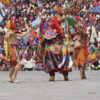
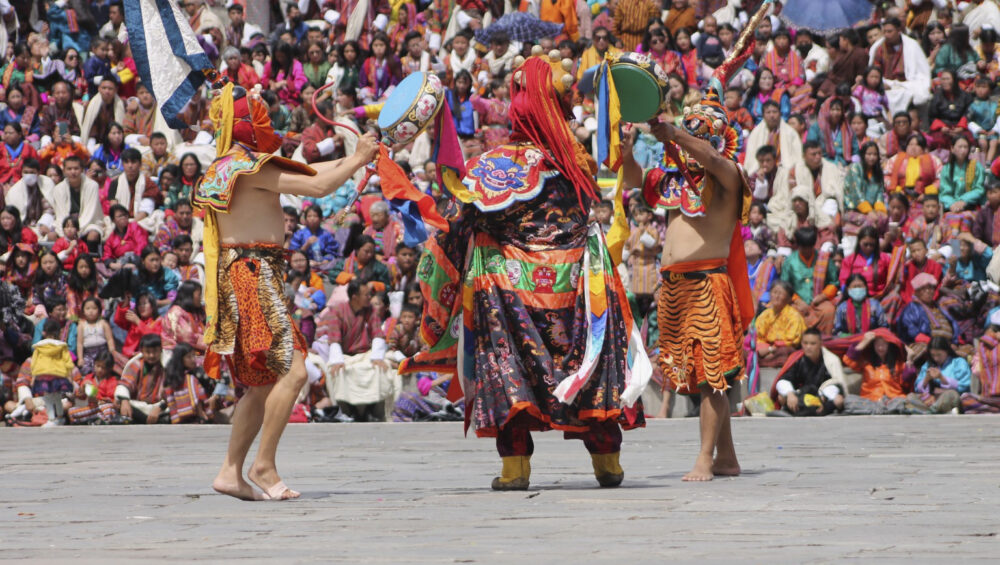
You may have seen images of masked dancers moving through a monastery courtyard, monks dressed in elaborate costumes, or Bhutanese families gathered in their finest traditional clothing. The colours are striking, the costumes are extraordinary and the setting can seem almost timeless.
But attending a Tshechu in Bhutan is about much more than watching a colourful performance.
For the people who gather there, a Tshechu is a religious and community occasion. It brings together monks, families, elderly people, children and visitors in a shared celebration of Bhutanese Buddhist traditions.
For a traveller, it can offer one of the most meaningful opportunities to experience Bhutanese culture—not simply as a spectator, but as a guest in a living tradition.
At Maebar Travel, we often help travellers plan their Bhutan journey around festivals, and one of the most common questions we hear is:
“What is it actually like to attend a Bhutanese festival?”
Here’s what you should know before you go.
What Is a Tshechu in Bhutan?
A Tshechu is a religious festival traditionally associated with Guru Rinpoche, also known as Guru Padmasambhava, an important figure in the history of Buddhism in Bhutan.
The word Tshechu refers to the tenth day of a lunar month. Tshechus are held in different parts of Bhutan throughout the year, with individual districts and monasteries observing their own festival dates.
Many Tshechus include sacred cham dances, performed by monks or trained lay performers wearing elaborate masks and costumes. Religious music, chanting and other traditional performances form part of the festival experience as well.
But describing a Tshechu simply as a “festival of masked dances” doesn’t quite capture what happens.
The courtyard is also a meeting place.
Local people come to see relatives and friends, receive blessings, watch the performances and spend time together. For many Bhutanese people, attending a Tshechu is part of the rhythm of community life.
That is what makes the experience so different from watching a cultural show arranged specifically for tourists.
What Is It Really Like to Attend a Bhutanese Festival?
The first thing you may notice is that you are not the main audience.
A Tshechu isn’t staged around visitors. The people sitting around the courtyard are there because the festival matters to them.
You’ll see Bhutanese families dressed in their traditional clothing, older people watching from the edges of the courtyard, children moving through the crowd and groups of friends catching up between performances.
The atmosphere can shift throughout the day.
One moment the courtyard may be filled with the sound of drums and cymbals as a masked dance begins. Later, the mood may become quieter during a religious ritual or blessing.
This mixture of spirituality, community and celebration is one of the most memorable things about attending a Tshechu.
The Masked Dances
The masked dances are usually what visitors notice first.
Dancers appear in elaborate costumes and masks representing different figures, animals, deities and characters associated with Buddhist teachings and Bhutanese religious traditions.
The movements can seem playful at times and intensely dramatic at others.
Traditional instruments accompany the dancers, while monks may perform religious chants and music.
It is tempting to think of these performances as simply traditional entertainment.
They are not.
The dances have religious meaning, and their significance is an important reason why visitors should approach a Tshechu with the same respect they would show when visiting a monastery or temple.
Why Do Bhutanese People Attend Tshechus?
For visitors, the festival may be one memorable day during a holiday.
For local people, it can be something much deeper.
Bhutan’s festivals have strong connections to Buddhism and to the country’s cultural heritage. Different communities maintain their own festival traditions, and Tshechus provide opportunities for people to gather and participate in religious and social life.
You may see people praying, receiving blessings, meeting relatives or simply enjoying being together.
This is why one of the best ways to experience a Bhutanese festival is to resist the temptation to treat the entire day as a photography session.
Take photographs, certainly—but also put the camera away occasionally.
Watch.
Listen.
Notice what is happening around you.
Can Tourists Attend Bhutanese Tshechus?
Yes. Visitors can attend Bhutanese festivals, and festivals are an important part of the country’s cultural travel experience.
However, visitors are guests at these events.
That distinction matters.
A Tshechu takes place in a religious and community setting, so visitors should follow the guidance of their local guide and respect areas where access may be restricted.
If people are praying or participating in a religious activity, give them space.
If you want to photograph someone, especially a person you don’t know, it is courteous to ask first.
Your guide can also explain what is happening during the festival, which makes the experience much more meaningful than simply watching the dances without context.
If you are interested in understanding Bhutan beyond the main tourist attractions, you may also enjoy our guide on [Travel Bhutan With a Local Guide].
What Should You Wear to a Tshechu in Bhutan?
You don’t need to wear Bhutanese traditional clothing to attend a festival.
However, respectful and modest clothing is appropriate, particularly because many Tshechus take place at monasteries, dzongs or other religious sites.
Wear clothing that is comfortable while still being respectful of the setting.
You should also think practically.
Festival days can involve considerable time outdoors, so depending on the season you may want:
-
Comfortable walking shoes
-
A light jacket or warm layer
-
Sun protection
-
A hat
-
Rain protection during wetter months
-
A small day bag
And remember that you may spend several hours standing, walking or sitting in a crowded courtyard.
Comfort matters.
Can You Take Photos at a Bhutanese Festival?
For photographers, a Tshechu can be an extraordinary experience.
The colours, costumes, architecture and expressions provide countless opportunities for photography.
But good festival photography in Bhutan begins with respect.
Don’t block people’s view to get a photograph.
Don’t walk into restricted areas.
Don’t interrupt prayers or religious ceremonies.
And when photographing local people at close range, ask permission where appropriate.
Sometimes the best photograph isn’t the one you take from directly in front of the dancer.
It might be the elderly couple watching quietly from the edge of the courtyard.
Or a child fascinated by the costumes.
Or the crowd gathering before the next dance.
Look beyond the performance itself.
Which Bhutanese Festivals Can You Attend?
Bhutan has festivals throughout the year, and different regions have their own celebrations.
Some of the better-known Tshechus include:
Paro Tshechu
Held in the Paro Valley, this is one of Bhutan’s most recognised festivals and can be combined naturally with a visit to Paro and the Tiger’s Nest.
You can learn more about Paro Tshechu and how it can fit into a Bhutan itinerary.
Thimphu Tshechu
Held in Bhutan’s capital, Thimphu Tshechu offers the opportunity to experience a major festival while also exploring the city and surrounding attractions.
Punakha Tshechu
Punakha provides a particularly beautiful setting for a festival, with the historic Punakha Dzong forming an impressive backdrop.
Learn more about [Punakha Tshechu] and the surrounding Punakha Valley.
Jambay Lhakhang Drup
Held in Bumthang, this festival is associated with one of Bhutan’s historic temples and offers an opportunity to explore the cultural heartland of central Bhutan.
Smaller Regional Tshechus
There are also many smaller festivals throughout Bhutan.
These can offer a different atmosphere, particularly for travellers interested in experiencing local community life away from the country’s larger tourist centres.
Paro, Thimphu or a Smaller Tshechu?
There isn’t one festival that is right for every traveller.
Instead, think about the kind of experience you want.
| If you are looking for… | You might consider… |
|---|---|
| A major and well-known festival | Paro Tshechu |
| A festival combined with time in the capital | Thimphu Tshechu |
| A beautiful historic setting | Punakha Tshechu |
| Central Bhutan and a deeper cultural journey | Bumthang festivals |
| A quieter community atmosphere | Smaller regional Tshechus |
The dates are particularly important because Bhutanese festivals follow the lunar calendar and different festivals take place at different times of the year.
Always check the current festival dates before booking flights and accommodation.
When Are Bhutanese Festivals Held?
There isn’t one single “festival season” in Bhutan.
Tshechus and other cultural celebrations take place throughout the year.
Spring and autumn are particularly associated with a number of major festivals, while other celebrations take place during the summer and winter months.
This means you can often design your Bhutan itinerary around a festival, rather than simply hoping one happens to coincide with your holiday.
If you’re planning a trip specifically to attend a Tshechu, check the dates before booking your international flights.
Festival dates can also affect accommodation availability and travel arrangements, particularly around popular celebrations.
For the latest schedule, see our Bhutan Festival Dates page.
How to Plan a Bhutan Trip Around a Tshechu
If attending a Bhutanese festival is one of your main reasons for visiting, don’t make the mistake of planning only the festival itself.
A better approach is to build a wider itinerary around it.
For example, a trip to attend Paro Tshechu could include:
-
Paro Valley
-
Tiger’s Nest
-
Thimphu
-
Punakha
-
Dochula Pass
-
Traditional Bhutanese villages
-
Local food experiences
-
Monasteries and dzongs
This gives you an opportunity to understand the culture you’re seeing at the festival in a broader context.
A local guide can also explain the significance of the dances, help with logistics and make sure you understand appropriate behaviour during religious ceremonies.
If you are looking for an itinerary built around a festival, explore our [Bhutan Festival Tours].
What Should You Expect on a Festival Day?
A festival day doesn’t necessarily mean sitting in one place watching dances continuously.
Depending on the festival, you may see:
Early morning
People arriving in traditional dress and gathering around the festival grounds.
Morning
Religious ceremonies and performances begin.
Throughout the day
Masked dances, traditional music, local performances and community activities continue.
Between performances
People talk, meet relatives, eat and move around the festival grounds.
Later in the festival
Some festivals have particularly significant ceremonies or events toward the final days.
The exact programme varies from one Tshechu to another.
That’s another reason having a local guide can be useful: they can explain what you’re seeing and why it matters.
Is Attending a Tshechu Worth Building Your Bhutan Trip Around?
If experiencing Bhutanese culture is one of your main reasons for visiting the country, a Tshechu can add a memorable cultural dimension to your journey.
But it isn’t necessarily the right choice for every traveller.
You should consider:
Festival crowds
The larger festivals can become busy, particularly on the most important days.
Accommodation
Popular festival dates can increase demand for accommodation in the surrounding area.
Your travel dates
Festival dates vary each year according to the Bhutanese calendar.
Your interests
If you’re primarily interested in trekking or nature, a festival may be one element of your itinerary rather than the main focus.
Your travel style
If you prefer quieter experiences, a smaller regional festival may be more suitable than a major celebration.
A Tshechu Is More Than a Performance
Perhaps the most important thing to understand about Bhutanese festivals is that they aren’t performances created for tourists.
The dances are beautiful.
The costumes are spectacular.
The photography can be extraordinary.
But underneath all of that is something more important: a living cultural and religious tradition.
You’re seeing people gather for reasons that existed long before international visitors began arriving in Bhutan.
And that’s what makes attending a Tshechu so memorable.
You aren’t simply watching Bhutanese culture.
For a short time, you’re being welcomed into a community gathering where religion, history, family and celebration come together.
Planning to Attend a Bhutanese Festival?
If you’d like to experience a Tshechu during your Bhutan journey, Maebar Travel can help you build your itinerary around the festival dates.
We can combine the festival with the places and experiences that interest you—from Paro and the Tiger’s Nest to Thimphu, Punakha, Bumthang and lesser-visited valleys.
Rather than creating a trip that revolves entirely around one festival, we can help you build a Bhutan itinerary that gives you time to understand the country beyond the festival grounds.
Planning your Bhutan trip around a Tshechu?
Tell us your preferred travel dates and interests, and our Bhutan-based team can help you create a private itinerary around the festival.
[Explore Bhutan Festival Tours]
[Plan Your Private Bhutan Journey]
Frequently Asked Questions
What is a Tshechu in Bhutan?
A Tshechu is a Bhutanese religious festival traditionally associated with Guru Rinpoche. Festivals commonly feature sacred mask dances, religious music, chanting and community gatherings. Different regions hold their own Tshechus on different dates.
Can tourists attend a Tshechu in Bhutan?
Yes. Visitors can attend Bhutanese festivals, but they should treat them as religious and community occasions and follow local guidance regarding photography, dress and access.
What should I wear to a Bhutanese festival?
Wear comfortable, modest clothing. Since many festivals take place at religious sites, respectful clothing is particularly important.
Can I take photographs at a Tshechu?
Photography is possible, but visitors should be respectful. Avoid interfering with religious ceremonies, follow any restrictions and ask before taking close-up photographs of people.
When are Bhutanese festivals held?
Festivals take place throughout the year. The exact dates vary by festival and follow the Bhutanese lunar calendar. Check the current festival calendar before planning your trip.
Which Bhutanese festival should I attend?
It depends on your travel dates, interests and the type of experience you want. Major festivals such as Paro and Thimphu offer large celebrations, while festivals in places such as Punakha and Bumthang can be incorporated into broader regional journeys.
How far in advance should I plan a Bhutan festival trip?
It’s sensible to plan ahead, particularly for popular festivals. Your travel dates can affect accommodation, transportation and the availability of suitable itineraries.