Bhutanese Etiquette: 15 Things Travelers Should Know Before Visiting Bhutan

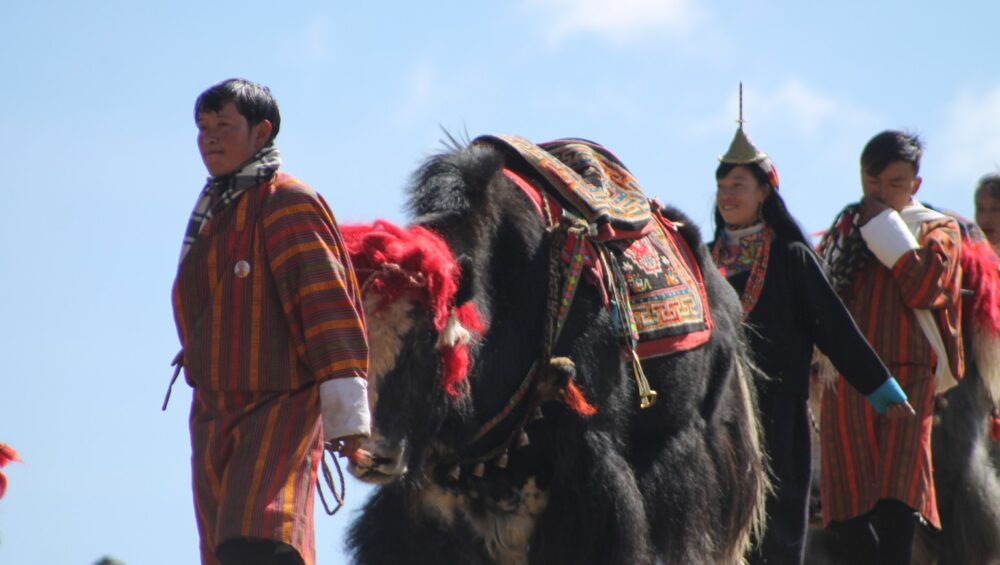
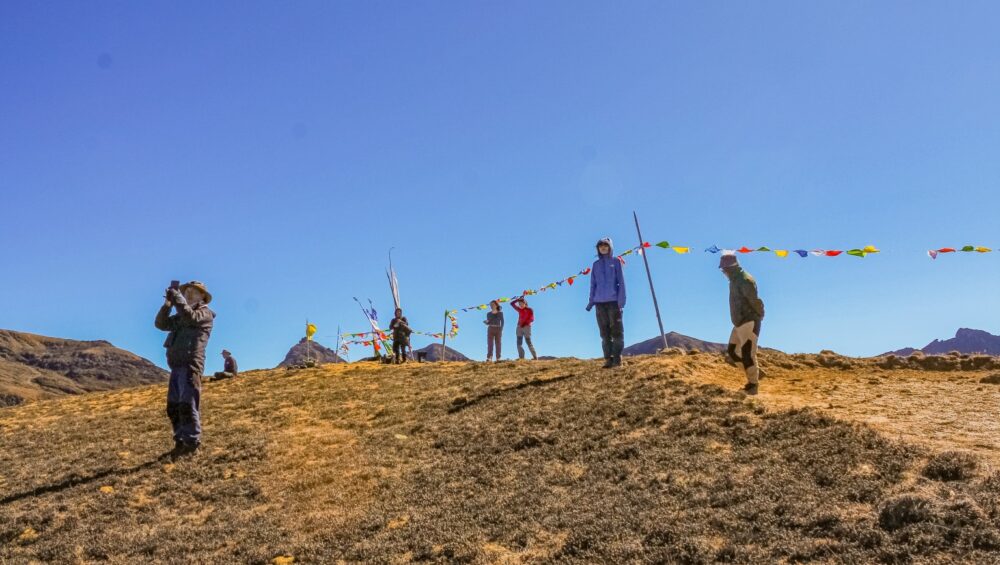
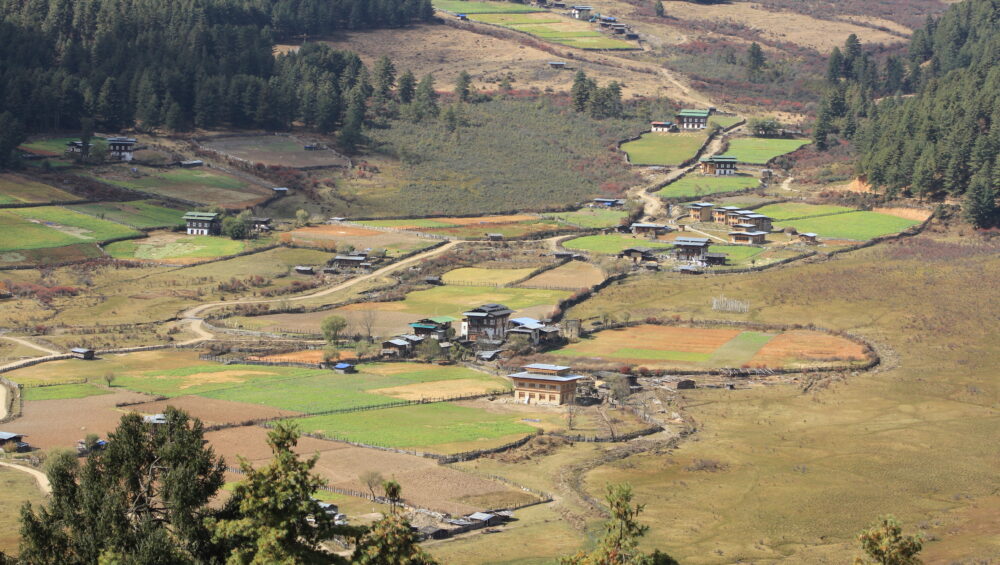
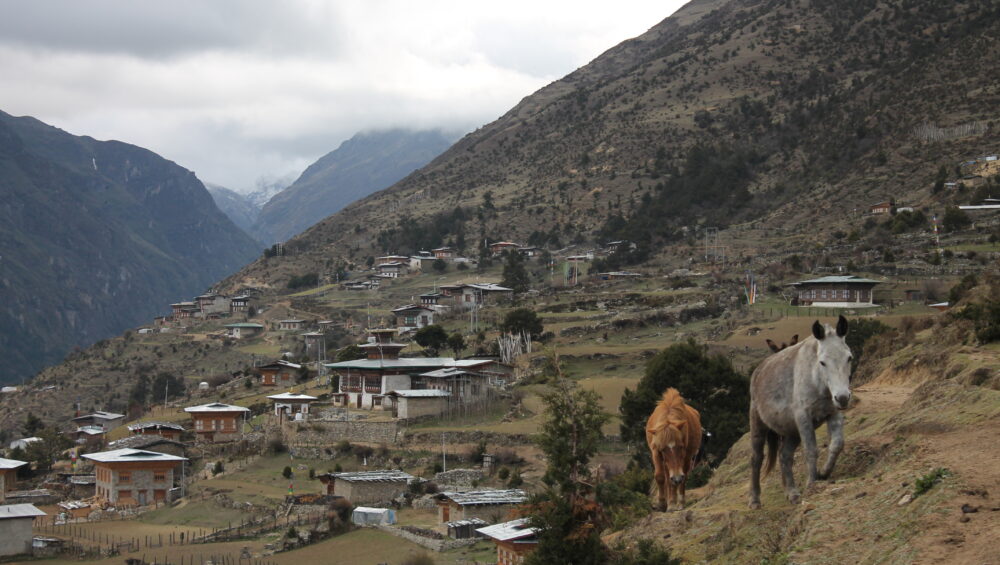
Planning a trip to Bhutan? Understanding a few important Bhutanese etiquette and cultural customs can help you travel with confidence while showing respect for the people, traditions, and sacred places you encounter. For more practical information to help you prepare for your journey, explore our Bhutan travel guide.

Bhutan is more than dramatic Himalayan landscapes, ancient monasteries, colorful festivals, and spectacular mountain roads. It is a country where Buddhist traditions, family values, community life, and respect for nature remain deeply woven into everyday life.

For first-time visitors, understanding Bhutanese customs and etiquette can also help avoid small cultural mistakes—especially when visiting temples, monasteries, dzongs, villages, and local homes.

From what to wear in Bhutan and how to behave inside a monastery to photography etiquette and the correct way to walk around a stupa, here are 15 important Bhutan travel etiquette tips to know before your trip.


Quick Answer: What Etiquette Should Travelers Follow in Bhutan?

Travelers visiting Bhutan should dress modestly at religious sites, remove hats and shoes when appropriate, ask permission before photographing people, remain quiet inside temples and monasteries, avoid touching religious objects, walk clockwise around stupas and prayer wheels, respect local beliefs, and follow the instructions of their guide or host.

You do not need to be an expert in Bhutanese culture. A little awareness, patience, and respect go a long way.


1. Dress Modestly When Visiting Religious Sites

One of the most important things to know about what to wear in Bhutan is that everyday clothing and religious-site clothing are not necessarily the same.

Bhutan does not impose a general dress code on tourists. However, when visiting temples, monasteries, dzongs, and other places of religious significance, visitors are expected to wear respectful clothing covering the shoulders and knees.

For your Bhutan trip, consider packing:

  • Long trousers or comfortable pants
  • Long skirts or dresses that cover the knees
  • Shirts or tops covering the shoulders
  • A light jacket or shawl
  • Comfortable shoes that can be removed easily

Avoid entering religious sites wearing very short shorts, crop tops, or revealing clothing.

Travel tip: Keep a lightweight scarf or jacket in your day bag. It can quickly make an otherwise casual outfit more appropriate for visiting a temple.


2. Remove Your Shoes When Required

Shoes should be removed before entering certain temples and sacred interiors.

The same principle can apply when entering a Bhutanese home. The official tourism guidance notes that Bhutanese commonly remove their shoes before entering houses.

Pay attention to your guide and observe what local people are doing.

If everyone is leaving their shoes outside, follow their example.

Good Bhutan travel etiquette: Wear clean socks, particularly during cooler months, because temple floors can be cold.


3. Be Quiet Inside Temples and Monasteries

Religious sites in Bhutan are not simply tourist attractions. They remain active places of worship.

When visiting a monastery, temple, dzong, or other sacred location:

  • Speak quietly
  • Silence your phone
  • Avoid unnecessary conversations
  • Do not disturb people who are praying
  • Follow instructions from your guide
  • Give worshippers space

Bhutan Tourism specifically asks visitors to maintain silence at sacred sites as a sign of respect for the country’s religious traditions.

This is one of the easiest ways to show cultural respect while traveling in Bhutan.


4. Always Ask Before Taking Someone’s Photograph

Bhutan is incredibly photogenic. From monks and farmers to traditional architecture and colorful markets, it can be tempting to photograph everything you see.

But Bhutanese photography etiquette is simple: ask permission before photographing people.

A friendly:

“May I take a photo?”

can make the experience much more respectful.

The official Bhutan tourism guidance also recommends asking before photographing citizens and being particularly mindful when people are praying or participating in religious festivals.

Remember that a person is not simply another part of the landscape.


5. Do Not Photograph Inside Sacred Altar Rooms

One of the most common questions travelers ask is:

Can you take photos inside Bhutanese temples?

The answer depends on the location, but photography is generally prohibited inside sacred altar rooms and certain religious interiors.

Bhutan Tourism advises visitors not to take photographs inside sacred sites and specifically asks travelers not to obstruct people practicing their faith.

Always ask your guide if photography is permitted before taking out your camera.

When photography is not allowed, put the camera away and enjoy the experience without it.

Sometimes the memories you do not photograph are the ones you remember most.


6. Never Touch Religious Objects Without Permission

Prayer wheels, statues, paintings, thrones, ritual objects, and other religious items should be treated with respect.

Do not touch them simply because they look interesting.

Inside temples, avoid:

  • Touching statues
  • Touching religious paintings
  • Leaning on sacred objects
  • Sitting on religious thrones
  • Moving ritual objects
  • Entering restricted areas

Bhutan’s official tourism guidance specifically asks visitors not to touch religious items or paintings and not to sit on sacred thrones inside temples.

When in doubt, ask your guide.


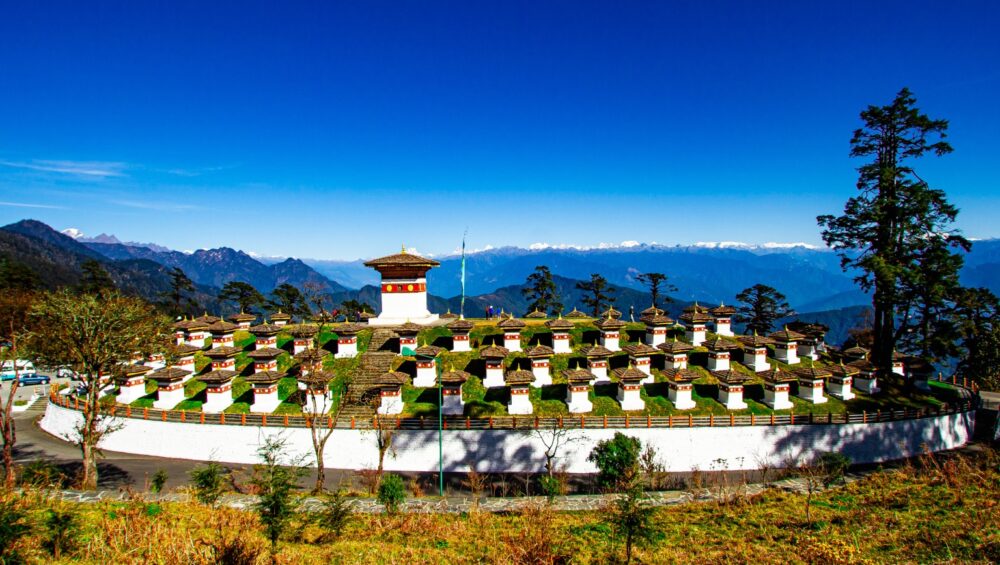
7. Walk Clockwise Around Stupas and Chortens

If you see people walking around a stupa, chorten, or shrine, you may notice that they move in a particular direction.

The traditional practice is to circumambulate Buddhist sacred objects clockwise.

Prayer wheels should also be turned clockwise.

This is an important part of Bhutan Buddhist etiquette and is something travelers should understand before visiting monasteries, villages, and religious monuments.

Rather than rushing through a sacred site, take your time and observe what local people are doing.


8. Remove Your Hat or Cap at Sacred Places

A small gesture can communicate a great deal of respect.

Bhutan Tourism recommends removing caps and hats when visiting sacred sites or meeting elders.

So if you are wearing:

  • A baseball cap
  • Sun hat
  • Beanie
  • Other headwear

be prepared to remove it when entering an appropriate sacred or formal setting.

This is particularly important when visiting monasteries, temples, dzongs, and meeting respected elders.


9. Learn a Few Bhutanese Words

You do not need to learn Dzongkha before visiting Bhutan, but knowing a few words can make interactions warmer.

Two useful expressions are:

Kuzu zangpo la — Hello

Kadrin chey la — Thank you

The word “la” is commonly used as a respectful expression in Bhutanese conversation.

You may not pronounce everything perfectly—and that is okay.

Making the effort is what matters.

A simple “Kuzu zangpo la” accompanied by a smile is a wonderful way to begin a conversation.


10. Respect Bhutanese Homes and Local Communities

If you are invited into someone’s home, treat the invitation as a privilege rather than a sightseeing opportunity.

Remove your shoes when appropriate, follow your host’s lead, and avoid photographing private spaces without permission.

You may also be offered food or drink.

Bhutanese hospitality is an important part of the country’s culture, and visitors may encounter customs that are different from what they are accustomed to at home.

For example, traditional etiquette can involve politely refusing an initial offer of food before eventually accepting.

The best approach is to watch your host and follow your guide’s advice.

When traveling in Bhutan, being observant is often more useful than trying to memorize every rule.


11. Respect Monks, Nuns, Elders, and Religious Practitioners

Bhutan is deeply influenced by Vajrayana Buddhism, and monks and nuns occupy an important place in religious and cultural life.

When interacting with monks, nuns, or elders:

  • Speak respectfully
  • Do not interrupt prayers
  • Give them personal space
  • Ask before taking photographs
  • Follow instructions at religious sites
  • Avoid casual behavior around sacred ceremonies

If you are seated on the floor with a monk, nun, elder, or host, Bhutan Tourism advises sitting cross-legged as a respectful posture.

Small gestures of consideration can make a significant difference.


12. Never Stand Between Worshippers and an Altar

This is an easy etiquette mistake for photographers and first-time visitors.

If someone is praying or making an offering, do not walk directly between them and the altar simply to get somewhere faster or capture a photograph.

Bhutan Tourism specifically advises travelers not to stand between religious observers and an altar or obstruct their ability to practice their faith peacefully.

Wait patiently or take another route.

In Bhutan, the right photograph is never more important than someone’s prayer.


13. Respect Bhutan’s Environment

Bhutan is internationally recognized for its commitment to environmental conservation, and nature is deeply connected with the country’s identity.

Visitors should follow a simple principle:

Leave Bhutan as you found it—or better.

That means:

  • Do not litter
  • Avoid damaging plants
  • Do not disturb wildlife
  • Stay on appropriate trails
  • Carry waste with you when necessary
  • Follow your guide’s instructions in remote areas

Bhutan Tourism also advises visitors not to venture into the wild without an accredited guide because encounters with wildlife and predators can occur even relatively close to populated areas.

Responsible travel is not just good manners—it helps protect the landscapes that make Bhutan special.


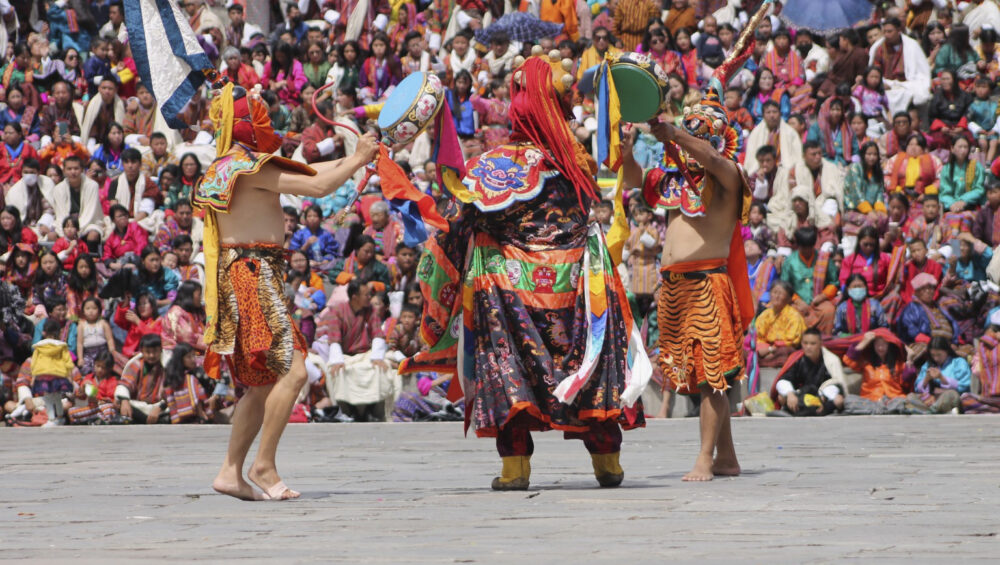
14. Be Respectful When Visiting Festivals

Bhutanese festivals, including traditional tsechus, are among the country’s most memorable cultural experiences. If you’re interested in experiencing these celebrations during your trip, learn more about Bhutan festivals and the best ways to experience them respectfully.

You will see elaborate costumes, masked dances, religious ceremonies, music, crowds, and deeply meaningful rituals.

It is easy to forget that these are not performances created solely for tourists.

When attending a Bhutanese festival:

  • Ask before photographing people
  • Do not push through crowds
  • Avoid blocking people’s view
  • Follow local instructions
  • Stay quiet during religious moments
  • Dress respectfully
  • Never interrupt performers or worshippers for a photograph

If you are unsure where visitors should stand, ask your guide.


15. Be Patient and Embrace the Bhutanese Way of Life

Perhaps the most important piece of Bhutan travel etiquette is simply to slow down.

Bhutan is not a destination where everything needs to happen quickly.

Mountain roads can take time. Weather can change. Conversations may last longer than expected. A local experience may not happen according to your original schedule.

Instead of treating these moments as inconveniences, embrace them.

Enjoy the tea.

Talk to your guide.

Watch the prayer flags move in the wind.

Take in the mountains.

Listen to the stories behind the places you visit.

The more open and patient you are, the more rewarding your Bhutan experience can become.


Bhutanese Etiquette: What NOT to Do in Bhutan

For a quick reference, here are some important things travelers should avoid:

  • Don’t enter temples in revealing clothing.
  • Don’t photograph people without asking.
  • Don’t take photographs where photography is prohibited.
  • Don’t touch religious paintings or objects.
  • Don’t sit on sacred thrones.
  • Don’t speak loudly inside religious sites.
  • Don’t interrupt people while they are praying.
  • Don’t stand between worshippers and an altar.
  • Don’t litter in natural areas.
  • Don’t disrespect local beliefs or traditions.
  • Don’t assume every religious ceremony is a tourist performance.
  • Don’t enter private homes or spaces without permission.
  • Don’t rush through cultural experiences.

What Should You Wear in Bhutan?

If you’re wondering what to wear for Bhutan, think comfortable, layered, and respectful.

For general sightseeing, practical travel clothing is perfectly appropriate.

For temples, monasteries, dzongs, and other religious sites, choose clothing that covers your shoulders and knees. Bhutan’s tourism authority recommends respectful smart-casual clothing for places of religious significance.

A useful Bhutan clothing checklist:

  • Long trousers
  • Comfortable walking shoes
  • Long-sleeved shirts
  • Lightweight layers
  • Warm jacket
  • Scarf or shawl
  • Comfortable socks
  • Modest clothing for monasteries and dzongs
  • Rain protection depending on season

Bhutan’s mountainous geography means temperatures can vary significantly depending on altitude and season, so layering is especially useful.


Is Bhutan Strict About Etiquette?

Bhutan is welcoming to international visitors, and you are not expected to understand every Bhutanese custom before arriving.

The key is respect rather than perfection.

You will likely make a small cultural mistake at some point. That is normal.

If you’re unsure whether you can take a photograph, ask.

If you’re unsure whether your clothing is appropriate, choose the more modest option.

If you don’t understand what is happening during a ceremony, observe your guide and the people around you.

A respectful attitude will take you much further than trying to memorize a long list of rules.


Why Bhutanese Etiquette Matters

Bhutan’s culture is not simply something preserved in museums.

Traditional dress remains visible in everyday life, while Buddhist practices, architecture, textiles, festivals, and community traditions continue to shape modern Bhutan.

That is part of what makes traveling through Bhutan so distinctive.

When you respect local etiquette, you are not just avoiding mistakes. You are creating opportunities for more genuine interactions with the people and places you encounter.

And those interactions can become some of the most memorable parts of your trip.


Planning a Bhutan Trip? Travel With Someone Who Understands the Culture

A knowledgeable local travel partner can make a major difference when visiting Bhutan for the first time.

From knowing how to behave inside monasteries to choosing the right time to visit festivals, villages, viewpoints, and cultural landmarks, local knowledge helps you experience Bhutan beyond the standard sightseeing checklist.

At Maebar Travel, our goal is to help travelers experience Bhutan with greater cultural understanding while making the journey comfortable, meaningful, and memorable.

Whether you’re planning a Bhutan cultural tour, honeymoon in Bhutan, family trip, photography journey, spiritual retreat, or Himalayan adventure, we can help you build an itinerary around the experiences that matter most to you.

Explore our Bhutan tour packages to find a journey that matches your interests and travel style.


Frequently Asked Questions About Bhutanese Etiquette

Do tourists have to wear traditional Bhutanese clothing?

No. Tourists are not generally required to wear Bhutanese national dress. However, modest clothing is expected and appreciated when visiting religious sites. Bhutan’s official tourism guidance recommends clothing that covers the shoulders and knees at places of religious significance.

What should tourists wear in Bhutan temples?

Wear clothing that covers your shoulders and knees. Long trousers, long skirts, dresses, and shirts with sleeves are good choices. You may also need to remove your shoes and hat before entering certain sacred areas.

Can I take photos inside Bhutanese monasteries?

Photography rules vary by location, but photography is not permitted in certain sacred interiors and altar rooms. Always ask your guide before taking photographs inside a temple or monastery.

Can I photograph Bhutanese people?

It is best to ask permission before photographing people. This is especially important when photographing monks, elders, people praying, festival participants, or people in private settings.

How do you say hello in Bhutan?

“Kuzu zangpo la” is a common way to say hello in Bhutan. “Kadrin chey la” means thank you.

What should I avoid doing in Bhutan?

Travelers should avoid disrespectful behavior at religious sites, photographing people without permission, touching sacred objects, speaking loudly in temples, littering, and interrupting religious ceremonies or prayers.

Do I need to know Bhutanese culture before visiting?

You don’t need extensive cultural knowledge before traveling to Bhutan. Learning a few basic customs, dressing respectfully, asking before taking photographs, and following your guide’s advice will help you travel respectfully.


Final Thoughts: Travel Bhutan With Respect

Bhutan rewards travelers who are willing to slow down, observe, and appreciate the culture around them.

The most important Bhutanese etiquette rules for travelers are surprisingly simple: dress respectfully, ask before taking photographs, be quiet around sacred places, respect religious objects and traditions, protect the environment, and treat local people with the same courtesy you would expect from visitors to your own home.

You don’t have to be perfect.

You simply have to be respectful, curious, and willing to learn.

And that is often the best way to experience the Land of the Thunder Dragon.

 Let Maebar Travel help you turn your trip into a meaningful journey—not just a sightseeing tour.

[Start Planning Your Bhutan Adventure →]


What to Eat in Bhutan: 15 Traditional Bhutanese Foods You Must Try

Bhutan is a country that is best experienced slowly. From its mountain valleys and ancient monasteries to its villages, festivals and warm hospitality, every part of a journey reveals something about the country’s unique way of life.

And food is no exception. Bhutanese cuisine is simple, hearty, flavorful and deeply connected to the land. Rice is a staple, chillies are an essential part of everyday cooking, and cheese, vegetables, buckwheat and locally raised meats feature prominently in traditional meals.

For travelers, discovering Bhutanese food is not simply about trying something new. It is an opportunity to experience the country’s culture and traditions in a very personal way—whether sharing a meal with a local family, enjoying a traditional farmhouse lunch or sitting down to a steaming bowl of Ema Datshi after a day in the mountains.

If you are planning a trip to Bhutan, here are 15 traditional Bhutanese foods and drinks worth trying.


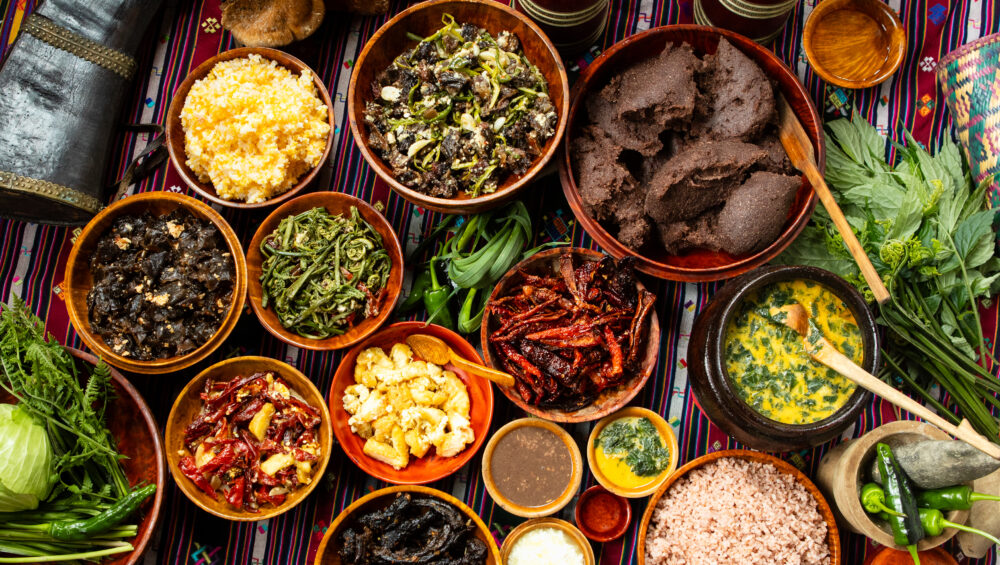
1. Ema Datshi – Bhutan’s Most Famous Dish

No introduction to Bhutanese food is complete without Ema Datshi.

Often described as Bhutan’s national dish, Ema Datshi is a comforting combination of chillies and cheese cooked together to create a rich, flavorful dish. It is traditionally eaten with rice and is found throughout Bhutan, from family kitchens to local restaurants.

The remarkable thing about Ema Datshi is how much it can vary. Some versions are mild and creamy, while others are packed with fiery chillies.

And yes, Bhutanese people really do eat a lot of chillies.

For first-time visitors, Ema Datshi is often the dish that best captures the character of Bhutanese cooking—simple ingredients, bold flavors and plenty of warmth.

Our tip: If you are not accustomed to spicy food, ask for a milder version. You can always add more chilli later!


2. Kewa Datshi – Potatoes, Cheese & Chilli

If you enjoy creamy and comforting food, Kewa Datshi is an excellent choice.

“Kewa” means potato, while “Datshi” refers to cheese. Thinly sliced potatoes are cooked with cheese and chilli to create a simple but delicious dish that pairs wonderfully with Bhutanese red rice.

Compared with Ema Datshi, Kewa Datshi is often a little easier for visitors who are still getting used to Bhutan’s love of chilli.

It is also a wonderful example of traditional Bhutanese cooking: everyday ingredients transformed into something deeply satisfying.


3. Shakam Datshi – Dried Beef with Cheese

For meat lovers, Shakam Datshi brings together two familiar elements of Bhutanese cuisine—dried beef and cheese.

The beef is cooked with cheese and chilli, creating a rich and hearty dish that goes particularly well with rice.

Dried meat has traditionally been an important way of preserving food through Bhutan’s colder months, and dishes such as Shakam Datshi offer travelers a glimpse into traditional food practices that developed around Bhutan’s mountain environment.


4. Phaksha Paa – Pork with Red Chillies

Phaksha Paa is a traditional pork dish with plenty of character.

Pork is cooked with dried red chillies and often accompanied by vegetables such as radish or leafy greens. The result is a hearty dish with a deep, savory flavor and the unmistakable warmth of Bhutanese chilli.

It is particularly enjoyable on cooler days when you have been exploring Bhutan’s mountain roads and valleys.

Served with rice, Phaksha Paa makes a filling traditional meal.


5. Jasha Maru – Bhutanese-Style Chicken

Jasha Maru is a flavorful chicken dish made with ingredients such as tomatoes, onions, garlic, ginger and chillies.

Unlike some of the richer cheese-based dishes, Jasha Maru has a lighter, more aromatic character while still retaining the bold flavors associated with Bhutanese cuisine.

It is commonly served with rice and is a good choice for travelers who want to explore local flavors without starting with the strongest chilli dishes.


6. Shakam Paa – Traditional Dried Beef

Another traditional meat dish worth looking for is Shakam Paa.

Made with dried beef and cooked with chilli and vegetables, this dish reflects Bhutan’s long tradition of preserving meat for later use.

The texture and flavor are quite different from freshly cooked beef, which makes Shakam Paa particularly interesting for travelers who want to experience traditional Bhutanese cuisine rather than simply familiar dishes prepared in a local style.


7. Momo – Bhutanese Dumplings

You may already know momos from other parts of the Himalayas, but they are still an essential food to try while traveling through Bhutan.

These steamed dumplings are made with different fillings, including meat, vegetables and cheese. They can be enjoyed as a snack, a light meal or shared around the table with friends and family.

Momos are particularly popular with travelers because they are familiar enough to be approachable while still offering plenty of local variations.

If you see cheese momos on a menu, give them a try.


8. Hoentay – Traditional Buckwheat Dumplings

If you travel through the Haa Valley and other parts of western Bhutan, keep an eye out for Hoentay.

These traditional dumplings are made using buckwheat flour and filled with ingredients such as local greens, cheese and other flavorful ingredients.

Hoentay are particularly associated with the Haa region and are a wonderful example of how Bhutanese cuisine changes from one valley to another.

Trying regional dishes like Hoentay is one of the pleasures of traveling beyond Bhutan’s most familiar tourist routes.


9. Puta – Buckwheat Noodles from Bumthang

Travel to Bumthang, and you will discover a different side of Bhutanese cuisine.

One of the region’s specialties is Puta, traditional noodles made from buckwheat.

Buckwheat has long been an important crop in the Bumthang region, and it appears in many traditional dishes. Puta can be prepared in different ways and makes a wonderful alternative to rice.

For travelers interested in discovering the regional diversity of Bhutanese food, Bumthang is a particularly rewarding destination.


10. Khurle – Traditional Buckwheat Pancakes

Another Bumthang specialty is Khurle, a traditional pancake made from buckwheat.

Khurle is commonly enjoyed with other local dishes and is especially associated with the food traditions of central Bhutan.

It may look simple, but foods like Khurle tell an important story about Bhutan. Local cuisine has traditionally developed around what communities could grow and produce in their own valleys.

That connection between food and landscape remains one of the most fascinating aspects of traveling through Bhutan.


11. Goep – For the Adventurous Food Traveler

For those who like trying something different, Goep is worth seeking out.

Goep is made from tripe and is generally cooked with chilli and other ingredients to create a flavorful local dish.

It is not necessarily something you will find on every restaurant menu, but when you come across it, it can be an interesting opportunity to step outside familiar foods and experience a more traditional side of Bhutanese cuisine.

Traveling is, after all, partly about trying something you have never tasted before.


12. Jaju – A Comforting Bhutanese Soup

After a long day of sightseeing, hiking or traveling through Bhutan’s mountain roads, a warm bowl of Jaju can be particularly comforting.

Jaju is a traditional milk-based soup prepared with vegetables and other simple ingredients. It is mild compared with many Bhutanese dishes and provides a pleasant balance alongside spicier foods.

For visitors who find Bhutanese chilli a little intense, Jaju can be a welcome addition to the table.


13. Ezay – Bhutan’s Favourite Chilli Relish

If you think you have tried enough chilli after Ema Datshi, wait until you encounter Ezay.

Ezay is a traditional Bhutanese chilli relish or condiment that accompanies many meals. Recipes vary between households, but ingredients can include fresh or dried chillies, tomatoes, onions and other local seasonings.

A little Ezay can completely transform a meal.

And a word of advice: start with a small amount.

Bhutanese standards for “spicy” can be very different from what many international travelers are accustomed to!


14. Bhutanese Red Rice

Although red rice is not a dish by itself, it deserves a place on any Bhutanese food list.

This traditional rice is grown in Bhutan’s valleys and is a staple accompaniment to many local dishes. It has a distinctive color, slightly nutty flavor and satisfying texture.

You will often find it served alongside Ema Datshi, meat dishes, vegetables and other traditional preparations.

For many visitors, a simple bowl of Bhutanese red rice with Ema Datshi becomes one of the defining tastes of their trip.


15. Zow – A Traditional Puffed Rice Snack

For something simple and traditional, try Zow, a puffed-rice snack enjoyed in Bhutan.

It is often eaten casually with tea or incorporated into snacks and local preparations.

Zow may not be as famous as Ema Datshi or momos, but that is precisely what makes these everyday foods interesting. They offer a glimpse into the ordinary side of Bhutanese life—the food people have enjoyed at home for generations.


What Do People Drink in Bhutan?

Food is only part of the Bhutanese culinary experience. Traditional drinks also play an important role in hospitality and everyday life.

Suja – Bhutanese Butter Tea

One of the most distinctive drinks you may encounter is Suja, or Bhutanese butter tea.

Unlike the sweet milk tea familiar in many parts of the world, Suja is traditionally made with tea, butter and salt. It is rich, warming and particularly suited to Bhutan’s cold mountain climate.

The first taste may surprise you. But don’t be afraid to try it. Food and drink are an important part of experiencing Bhutanese hospitality, and being offered tea is often an invitation to slow down and share a moment with others.

Ngaja – Sweet Milk Tea

If you prefer something more familiar, Ngaja, a sweet milk tea, is a much easier introduction.

Tea is deeply woven into Bhutanese hospitality, and you may encounter it during meals, visits to local homes or time spent with Bhutanese families.

Ara – Traditional Bhutanese Alcohol

Ara is a traditional alcoholic drink made from grains such as rice, wheat, maize, millet or barley.

It is particularly associated with traditional and rural communities and can be prepared in different ways.

For visitors, trying Ara can offer another small glimpse into Bhutan’s traditional food and drink culture.


Is Bhutanese Food Very Spicy?

The short answer is: yes, it can be!

Chillies are an essential part of Bhutanese cuisine. In many dishes, they are not simply used to add heat—they are treated almost like a vegetable.

This is one of the biggest differences many travelers notice when they first experience Bhutanese food.

If you love spicy food, you are going to have a wonderful time.

If you don’t, there is no need to worry.

Hotels and restaurants that regularly welcome international travelers can usually adjust the level of chilli. Your local guide can also help you choose dishes that suit your taste.

The best approach is simply to tell your guide what you enjoy.


Where Can You Experience Authentic Bhutanese Food?

Some of the best food experiences in Bhutan happen away from formal restaurants.

During your journey, you may have the opportunity to enjoy a meal at:

  • A traditional Bhutanese restaurant
  • A local farmhouse
  • A village home
  • A family-run guesthouse
  • A local market
  • A homestay
  • A traditional festival

A farmhouse meal can be particularly memorable.

Sitting down with a local family, eating food prepared from ingredients grown nearby and sharing conversation over a cup of tea gives you something that a restaurant simply cannot provide.

It allows you to experience Bhutan not just as a destination, but as a place where people live, work, cook and share meals every day.


Bhutanese Food Changes From Region to Region

One of the most rewarding aspects of traveling through Bhutan is discovering that food changes with the landscape.

In western Bhutan, you may encounter dishes such as Hoentay and different variations of Datshi.

In central Bhutan, particularly around Bumthang, buckwheat becomes much more prominent, with foods such as Puta and Khurle reflecting the region’s agricultural traditions.

As you travel farther east, you will discover additional regional dishes and ingredients that are less commonly found on menus in the main tourist centers.

This is one reason we encourage travelers not to rush through Bhutan.

Every valley has its own character—and sometimes its own taste.


Eating in Bhutan Is Part of the Experience

One of the wonderful things about Bhutanese food is that it does not try to be complicated.

It is built around simple ingredients, traditional cooking methods and flavors that have been passed from one generation to the next.

A bowl of Ema Datshi may seem simple. A plate of red rice may seem humble. A cup of butter tea may taste unfamiliar.

But when enjoyed in the right setting—perhaps overlooking a valley, sitting inside a traditional farmhouse or sharing a meal with a Bhutanese family—these foods become part of the story of your journey.

That is what makes eating in Bhutan so memorable.

You are not simply tasting food.

You are experiencing a part of Bhutanese life.


Discover Bhutan Through Its Food

At Maebar Travel, we believe that experiencing Bhutan goes far beyond visiting its famous landmarks.

As a locally owned Bhutanese tour operator, we create journeys that allow travelers to experience the country’s culture, traditions, landscapes, food and people at a more personal level.

Whether you want to explore Bhutan’s famous monasteries, discover traditional villages, enjoy local cuisine, attend a vibrant festival or venture into lesser-known valleys, we can create a journey around the experiences that matter to you.

Come hungry, travel slowly, and let Bhutan surprise you.

Ready to experience Bhutan for yourself?

Explore our Bhutan tours or contact Maebar Travel to create your tailor-made Bhutan journey.

How Many Days Do You Need in Bhutan? A Bhutanese Travel Expert Explains

One of the most common questions we receive from travelers planning their Bhutan holiday is:

“How many days do we need in Bhutan?

It is an important question because Bhutan is unlike many destinations around the world.

This Himalayan kingdom is not a place where travelers simply move from one attraction to another. Bhutan is about the peaceful rhythm of mountain valleys, ancient monasteries, traditional villages, sacred landscapes, and meaningful encounters with local people.

From watching the sunrise over Himalayan peaks to sharing a traditional meal with a Bhutanese family, many of the most memorable moments happen when you have enough time to slow down and truly experience the country.

As a Bhutanese travel company, we often tell our guests that the best Bhutan itinerary is not necessarily the one that covers the most places. It is the one that allows you to connect with Bhutan in a deeper and more meaningful way.

So, how many days do you need in Bhutan?

The answer depends on what you want to experience.


How Many Days Are Enough for a Bhutan Trip?

The ideal duration for a Bhutan trip depends on your travel style, interests, and expectations.

For most international visitors:

  • 5 days is enough for a short introduction to Bhutan
  • 7 days is ideal for first-time visitors
  • 10 days allows a deeper cultural experience
  • 13 days or more offers a complete Bhutan journey

Let us explore what each duration offers.


5 Days in Bhutan: A Short but Memorable Himalayan Escape

A 5-day Bhutan itinerary is suitable for travelers who have limited time but still want to experience the highlights of Bhutan.

A short journey usually focuses on the western valleys of:

  • Paro
  • Thimphu
  • Punakha

During this time, travelers can experience some of Bhutan’s most iconic attractions.

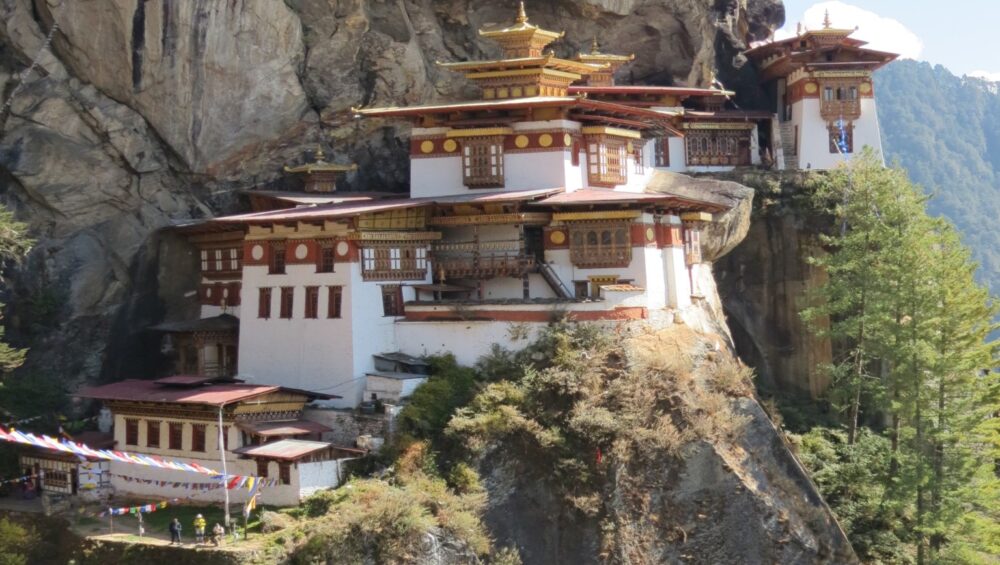
Tiger’s Nest Monastery (Taktsang)

No Bhutan journey feels complete without visiting the legendary Tiger’s Nest Monastery.

Built dramatically on a cliffside above Paro Valley, Taktsang is one of Bhutan’s most sacred sites and a symbol of the country’s spiritual heritage.

The hike to Tiger’s Nest is not only about reaching the monastery. It is about experiencing the peaceful surroundings, mountain views, prayer flags, and spiritual atmosphere along the way.

“Tiger’s Nest Monastery guide” 

Thimphu: Bhutan’s Unique Capital

Thimphu offers a fascinating blend of tradition and modern Bhutanese life.

Highlights include:

  • Buddha Dordenma Statue
  • Traditional arts and crafts
  • Local markets
  • Bhutanese cuisine
  • Memorial Chorten

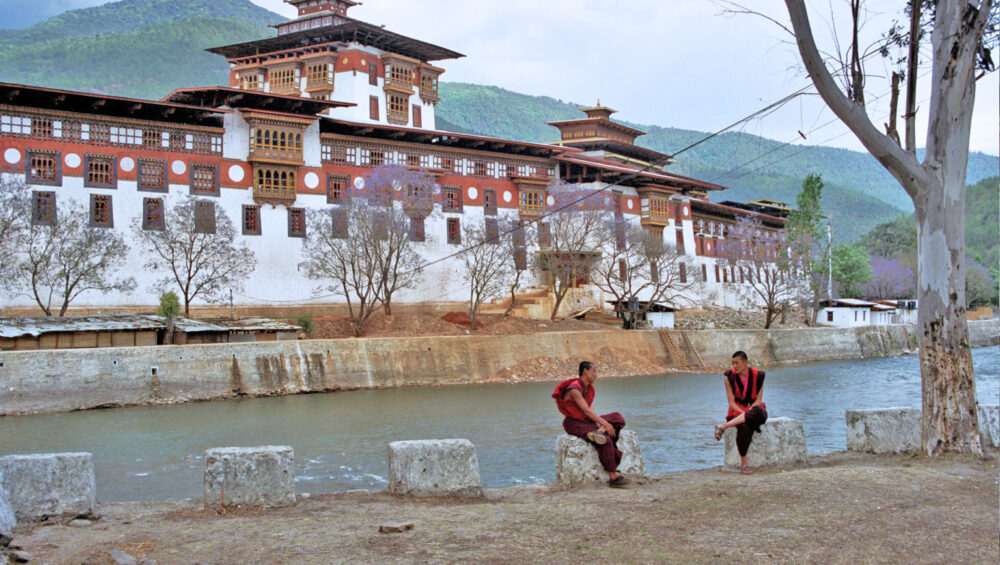
Punakha: The Former Capital of Bhutan

Known for its beautiful landscapes and magnificent dzong, Punakha offers travelers a glimpse into Bhutan’s history and culture.

Highlights include:

  • Punakha Dzong
  • Scenic countryside
  • Traditional villages
  • Beautiful valley landscapes

A 5-day Bhutan tour is perfect for those looking for a brief cultural introduction. However, because Bhutan is a country meant to be experienced slowly, additional days allow you to discover much more.


7 Days in Bhutan: The Ideal Bhutan Itinerary for First-Time Visitors

For many travelers, 7 days is the perfect length for a first Bhutan trip.

A one-week Bhutan itinerary provides enough time to explore the country’s famous destinations while maintaining a comfortable pace.

Unlike a rushed journey, a 7-day trip allows you to enjoy the landscapes, monasteries, local culture, and peaceful atmosphere that make Bhutan unique.

A typical 7-day Bhutan experience includes:

Discovering Paro Valley

Paro is the gateway to Bhutan and one of the country’s most beautiful valleys.

Experiences include:

  • Tiger’s Nest hike
  • Paro Dzong
  • National Museum
  • Traditional villages
  • Scenic mountain landscapes

Experiencing Thimphu

Bhutan’s capital provides insight into everyday Bhutanese life.

Travelers can explore:

  • Traditional handicraft centers
  • Local markets
  • Buddhist landmarks
  • Cultural museums
  • Authentic Bhutanese restaurants

Exploring Punakha Valley

Punakha is often considered one of Bhutan’s most beautiful regions.

Visitors can enjoy:

  • Punakha Dzong
  • Valley walks
  • Rural landscapes
  • Traditional farmhouses

A 7-day Bhutan itinerary is ideal for travelers visiting Bhutan for the first time because it offers a wonderful balance of culture, nature, spirituality, and relaxation.


10 Days in Bhutan: Discover Bhutan Beyond the Highlights

If you have more time, a 10-day Bhutan Tour allows you to move beyond the classic route and experience a more authentic side of the country.

With additional days, you can explore destinations such as:

Phobjikha Valley: A Peaceful Himalayan Retreat

Phobjikha is one of Bhutan’s most beautiful valleys, known for its peaceful surroundings and natural beauty.

Highlights include:

  • Gangtey Monastery
  • Black-necked crane habitat
  • Traditional villages
  • Scenic walks

Haa Valley: Bhutan’s Hidden Gem

Often missed by travelers, Haa Valley offers an authentic experience away from the usual tourist routes.

Here you can enjoy:

  • Mountain scenery
  • Traditional villages
  • Local interactions
  • Peaceful landscapes

More Authentic Experiences

A longer Bhutan itinerary also allows time for:

  • Farmhouse stays
  • Traditional cooking experiences
  • Village visits
  • Short hikes
  • Deeper cultural connections

For travelers who want to understand Bhutan beyond the famous landmarks, 10 days is an excellent choice.


13 Days or More in Bhutan: The Complete Bhutan Experience

For travelers seeking a deeper connection with Bhutan, a 13-day or longer Bhutan journey offers the opportunity to explore the country at a more meaningful pace.

A longer Bhutan adventure can include:

Bumthang: The Spiritual Heartland of Bhutan

Bumthang is home to some of Bhutan’s oldest temples and monasteries.

Travelers can discover:

  • Sacred Buddhist sites
  • Traditional villages
  • Beautiful valleys
  • Local traditions

Remote Himalayan Regions

With more time, visitors can explore less-visited areas and experience a side of Bhutan that few travelers discover.

A longer stay is ideal for:

  • Photography enthusiasts
  • Culture lovers
  • Repeat visitors
  • Nature travelers
  • Those seeking an authentic Himalayan experience

How Many Days Should You Spend in Bhutan Based on Your Travel Style?

First-Time Visitors

Recommended duration: 7 days

A perfect introduction to Bhutan’s culture, history, and landscapes.

Luxury Travelers

Recommended duration: 7–12 days

A longer stay allows time for beautiful accommodations, private experiences, and a relaxed travel pace.

Couples and Honeymooners

Recommended duration: 7–10 days

More time allows couples to enjoy romantic landscapes, peaceful valleys, cultural experiences, and special moments together.

Families Visiting Bhutan

Recommended duration: 7–10 days

A comfortable itinerary allows families to enjoy Bhutan without spending too much time traveling between destinations.

Photography Travelers

Recommended duration: 10–14 days

Extra time provides better opportunities for landscapes, monasteries, festivals, and village photography.

Culture and Spiritual Travelers

Recommended duration: 10+ days

A longer journey allows deeper exploration of Bhutanese traditions, spirituality, and local life.


Why You Should Not Rush Your Bhutan Journey

Many travelers underestimate Bhutan because of its size.

Although Bhutan is a small Himalayan kingdom, its mountainous geography means that traveling between valleys takes time. The journey itself becomes part of the experience.

Some of the most memorable moments in Bhutan happen away from the main attractions:

  • A conversation with a local family
  • A peaceful walk through a village
  • A traditional Bhutanese meal
  • A quiet moment at an ancient monastery
  • A scenic mountain drive

Bhutan is not about collecting destinations.

It is about experiencing a way of life.


What Is the Best Duration for a Bhutan Tour?

There is no single perfect answer because every traveler comes to Bhutan with different dreams.

However, as a general guide:

5 Days in Bhutan
Best for travelers with limited time who want to experience the highlights.

7 Days in Bhutan
The ideal duration for most first-time visitors.

10 Days in Bhutan
Perfect for travelers who want a deeper cultural journey.

14 Days or More in Bhutan
Best for those seeking a complete and immersive experience.


Frequently Asked Questions About How Many Days You Need in Bhutan

Is 5 days enough for a Bhutan trip?

Yes, 5 days can be enough for travelers who have limited time and want to experience Bhutan’s main highlights. A short Bhutan itinerary usually focuses on Paro, Thimphu, and Punakha, including attractions such as Tiger’s Nest Monastery, Buddha Dordenma Statue, and Punakha Dzong.

However, a 5-day trip will focus mainly on the highlights, with less time for exploring remote valleys, local communities, and deeper cultural experiences.


Is 7 days the ideal length for a Bhutan trip?

For most first-time visitors, 7 days is considered the ideal Bhutan itinerary duration.

A 7-day Bhutan journey allows enough time to explore the country’s famous destinations at a comfortable pace while experiencing Bhutanese culture, landscapes, monasteries, and local traditions.


How many days do you need to see the best of Bhutan?

To experience the best of Bhutan, we recommend at least 7–10 days.

A 7-day trip covers the classic destinations of Paro, Thimphu, and Punakha, while a 10-day itinerary allows you to include beautiful destinations such as Phobjikha Valley and Haa Valley.

For eastern Bhutan, Bumthang, or more remote regions, a longer journey of 14 days or more is recommended.


Can I visit Bhutan in less than a week?

Yes, it is possible to visit Bhutan in less than a week, especially if you have limited vacation time.

A shorter trip can still offer wonderful experiences, including visiting Tiger’s Nest Monastery, exploring Bhutanese towns, discovering ancient temples, and enjoying Himalayan landscapes.

However, Bhutan is best experienced slowly, and additional days allow you to appreciate the culture, people, and peaceful atmosphere of the country.


Is Bhutan worth visiting for only 7 days?

Absolutely. Seven days is enough time to experience why Bhutan is one of the world’s most unique destinations.

In one week, travelers can experience:

  • Ancient Buddhist monasteries
  • Beautiful Himalayan valleys
  • Traditional Bhutanese culture
  • Local cuisine
  • Historic dzongs
  • Warm Bhutanese hospitality

How many days are needed for a honeymoon in Bhutan?

For a Bhutan honeymoon, we recommend 7–10 days.

This allows couples to enjoy Bhutan’s peaceful landscapes, romantic valleys, beautiful accommodations, cultural experiences, and special moments without rushing.


How many days should I spend in Bhutan for photography?

Photography enthusiasts should consider spending 10–14 days in Bhutan.

A longer stay provides more opportunities to capture:

  • Himalayan landscapes
  • Monasteries and temples
  • Rural villages
  • Bhutanese festivals
  • Sunrise and sunset views
  • Local traditions

What is the best Bhutan itinerary length for families?

For families, we usually recommend 7–10 days in Bhutan.

A comfortable pace allows families to enjoy cultural attractions, nature, and local experiences without spending too much time traveling between destinations.


Should I spend more time in Bhutan or combine it with another country?

This depends on your travel goals.

If Bhutan is your main destination, we recommend spending at least 7–10 days to truly appreciate the country.

If you are combining Bhutan with destinations such as Nepal or India, a shorter Bhutan itinerary can still provide a meaningful experience.

However, many travelers find that Bhutan deserves its own dedicated journey because of its unique culture and peaceful atmosphere.


Plan Your Bhutan Journey With Maebar Travel

Choosing how many days to spend in Bhutan is the first step toward creating your dream Himalayan journey.

At Maebar Travel, we believe every traveler deserves a Bhutan experience designed around their interests, pace, and expectations.

As a Bhutanese-owned travel company, we combine local knowledge, authentic experiences, and thoughtful planning to create journeys that go beyond sightseeing.

Whether you are planning a short cultural escape, a luxury Bhutan holiday, a honeymoon, a family adventure, or a deeper exploration of Bhutan’s hidden valleys, our team is here to help you create a journey that feels truly personal.

Let Maebar Travel help you discover the perfect Bhutan Tours for your unforgettable Himalayan journey.

Bhutan Honeymoon: The Ultimate Guide to a Romantic Escape in the Himalayas

Planning your Bhutan honeymoon? If you’re looking for a destination that combines breathtaking mountain scenery, rich cultural heritage, luxurious stays, and unforgettable experiences, Bhutan offers one of the most unique honeymoon destinations in the world.


Luxury Travel to Bhutan: The Ultimate Guide to an Exclusive Himalayan Escape

There are luxury destinations, and then there is Bhutan.

Hidden among the soaring peaks of the Eastern Himalayas, the Kingdom of Bhutan offers something increasingly rare in modern travel—true exclusivity. There are no crowded landmarks, sprawling commercial resorts, or rushed itineraries. Instead, Bhutan invites travelers into a world where ancient monasteries cling to dramatic cliffs, pristine forests blanket untouched valleys, and centuries-old Buddhist traditions remain deeply woven into everyday life.

For discerning travelers seeking privacy, authenticity, and exceptional service, luxury travel to Bhutan is more than a holiday—it is an immersive journey designed around your interests and personal travel style.

Whether you’re planning a romantic honeymoon, a wellness retreat, a multi-generational family vacation, or a bespoke cultural expedition, Bhutan delivers an experience unlike anywhere else on Earth.


Why Bhutan Is Asia’s Most Exclusive Luxury Destination

Unlike many destinations overwhelmed by mass tourism, Bhutan follows its internationally admired High Value, Low Volume tourism policy. This carefully managed approach preserves the country’s remarkable landscapes, rich cultural heritage, and traditional way of life while offering visitors an authentic and uncrowded experience.

For luxury travelers, this means:

  • Uncrowded monasteries and sacred sites
  • Personalized private tours with experienced local guides
  • Exceptional Bhutanese hospitality
  • Peaceful Himalayan landscapes untouched by overdevelopment
  • Authentic cultural encounters
  • Sustainable tourism that benefits local communities

Bhutan is also the world’s only carbon-negative country, with over 70% of its land covered by forests protected under the country’s constitution. Luxury travel here is about experiencing one of the world’s most pristine destinations while contributing to its preservation.


Bespoke Luxury Bhutan Tours Tailored to You

No two travelers are alike, and neither should their journeys.

At Maebar Travel, every luxury Bhutan tour is carefully designed around your interests, pace, and expectations. Whether you dream of exploring ancient monasteries, enjoying world-class wellness retreats, photographing dramatic Himalayan landscapes, or discovering Bhutan’s vibrant festivals, every itinerary is fully customized.

Popular tailor-made experiences include:

  • Private cultural journeys through Bhutan’s historic valleys
  • Luxury honeymoon packages
  • Family adventures with personalized activities
  • Wellness and mindfulness retreats
  • Festival tours with premium access
  • Luxury trekking expeditions
  • Photography tours
  • Exclusive helicopter sightseeing experiences

Every journey combines comfort, privacy, and authentic cultural immersion.


The Finest Luxury Resorts in Bhutan

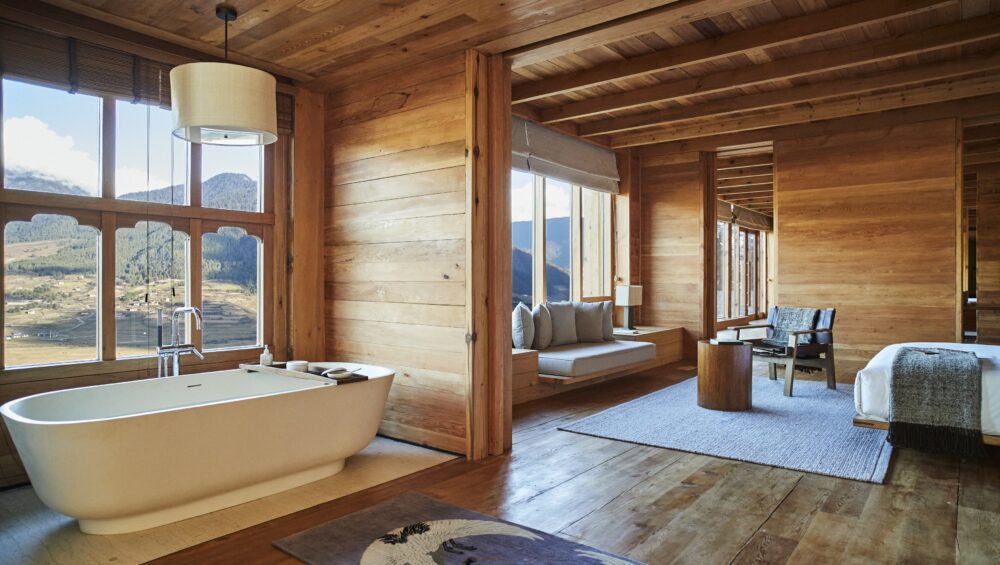
Bhutan offers an exceptional collection of luxury hotels that seamlessly blend contemporary comfort with traditional Bhutanese architecture and breathtaking natural surroundings.

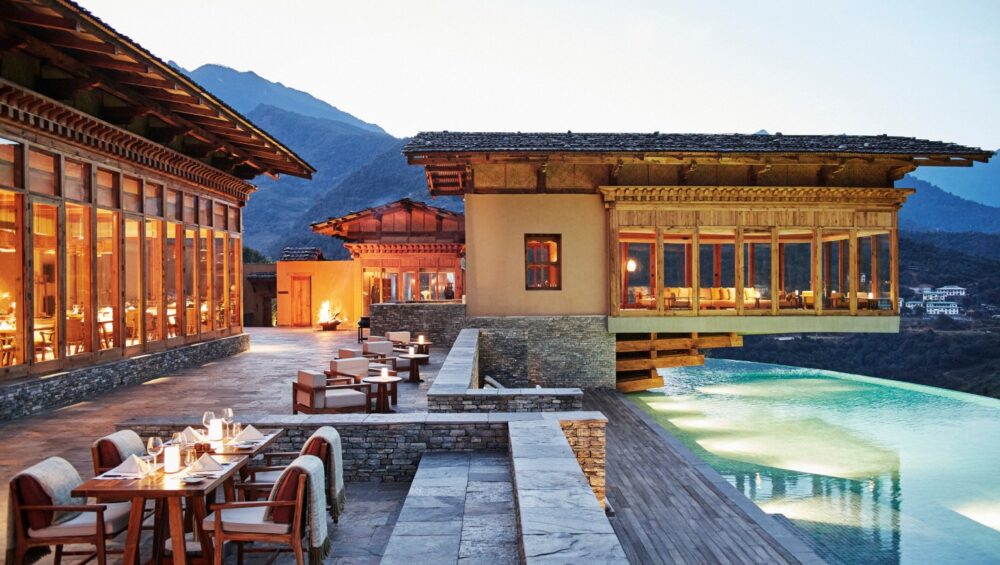
Six Senses Bhutan

Spread across five spectacular valleys—Thimphu, Punakha, Gangtey, Bumthang, and Paro—Six Senses Bhutan offers one of the world’s most unique luxury lodge collections.

Guests can enjoy:

  • Private villas with panoramic mountain views
  • Signature wellness programs
  • Himalayan-inspired spa treatments
  • Organic farm-to-table cuisine
  • Personalized excursions
  • Sustainable luxury design

Each lodge offers a unique experience while maintaining the highest standards of luxury and service.


Amankora Bhutan

For travelers who appreciate understated elegance and exceptional privacy, Amankora has become one of Asia’s most iconic luxury hospitality brands.

Highlights include:

  • Spacious luxury suites
  • Dedicated personal service
  • Exclusive cultural experiences
  • Gourmet dining
  • Seamless transfers between lodges
  • Tranquil locations surrounded by nature

Amankora perfectly captures Bhutan’s peaceful atmosphere while providing world-class comfort.


COMO Uma Paro

Nestled above the beautiful Paro Valley, COMO Uma Paro combines luxury accommodation with holistic wellness.

Guests enjoy:

  • Award-winning spa therapies
  • Yoga and meditation programs
  • Fine dining featuring Bhutanese and international cuisine
  • Elegant mountain-view suites
  • Guided cultural excursions

It is especially popular among honeymooners and wellness travelers.


Gangtey Lodge

Located in the breathtaking Phobjikha Valley, Gangtey Lodge offers luxurious accommodation overlooking one of Bhutan’s most scenic landscapes.

Known for its warm hospitality and elegant design, the lodge is an excellent choice for travelers seeking tranquility, birdwatching, and breathtaking Himalayan scenery.


Extraordinary Luxury Experiences in Bhutan

Luxury travel in Bhutan is defined not only by exceptional accommodation but by exclusive experiences that create unforgettable memories.

Private Tiger’s Nest Monastery Experience

Perched dramatically on a cliff nearly 900 meters above the Paro Valley, Tiger’s Nest Monastery is Bhutan’s most iconic landmark.

A private guided hike allows you to experience this sacred monastery at your own pace while learning about Bhutanese Buddhism and local traditions.

Luxury enhancements may include:

  • Early morning departures
  • Gourmet picnic lunches
  • Private photography opportunities
  • Luxury vehicle transfers
  • Personalized cultural interpretation

Reaching Tiger’s Nest is more than a hike—it is one of the world’s truly unforgettable travel experiences.


Helicopter Adventures Over the Himalayas

Experience Bhutan from a completely different perspective.

Private helicopter flights reveal:

  • Snow-capped Himalayan peaks
  • Hidden monasteries
  • Remote valleys
  • Ancient fortresses
  • Glacial lakes
  • Picturesque villages

These exclusive flights provide spectacular aerial views and incredible photography opportunities.


Private Cultural Encounters

One of Bhutan’s greatest luxuries is the opportunity to connect with its people and traditions.

Exclusive experiences include:

  • Private monastery blessings
  • Traditional Buddhist ceremonies
  • Visits to artisan workshops
  • Archery demonstrations
  • Bhutanese farmhouse dining
  • Festival experiences
  • Meetings with local scholars

These authentic encounters provide meaningful insight into Bhutan’s living culture.


Luxury Wellness Retreats in Bhutan

Known as the Land of Gross National Happiness, Bhutan naturally lends itself to wellness and personal renewal.

Luxury wellness retreats combine ancient Himalayan traditions with world-class spa facilities.

Experiences may include:

  • Guided meditation
  • Private yoga sessions
  • Traditional hot stone baths
  • Forest bathing
  • Holistic spa treatments
  • Sound healing
  • Digital detox programs
  • Mindfulness coaching

Many travelers now choose Bhutan as an alternative to destinations such as Bali or the Maldives when seeking a truly transformative wellness escape.


Fine Dining and Culinary Experiences

Luxury travel is also about exceptional food, and Bhutan offers a unique culinary journey.

Enjoy:

  • Candlelit dinners overlooking Himalayan valleys
  • Organic farm-to-table cuisine
  • Traditional Bhutanese tasting menus
  • Gourmet international dining
  • Cooking classes with local chefs
  • Riverside picnics
  • Private wine and whisky tastings

Every meal reflects Bhutan’s emphasis on fresh local ingredients, seasonal produce, and warm hospitality.


Luxury Honeymoon in Bhutan

For couples seeking romance beyond the ordinary, Bhutan is one of Asia’s most intimate luxury destinations.

Imagine waking up to panoramic mountain views before enjoying a private breakfast overlooking mist-covered valleys. Spend your days exploring ancient monasteries, relaxing with couples’ spa treatments, or enjoying exclusive helicopter flights above the Himalayas.

Romantic experiences include:

  • Luxury suites with mountain views
  • Private spa treatments
  • Sunrise breakfasts
  • Romantic monastery visits
  • Scenic helicopter adventures
  • Candlelit dinners beneath the stars

A Bhutan honeymoon offers tranquility, privacy, and unforgettable shared experiences.


Best Time for Luxury Travel to Bhutan

Spring (March to May)

Spring transforms Bhutan into a colourful paradise of blooming rhododendrons, flowering forests, and crystal-clear mountain views.

Perfect for:

  • Photography
  • Hiking
  • Wildlife
  • Cultural tours

Autumn (September to November)

Autumn is Bhutan’s most popular travel season.

Expect:

  • Comfortable temperatures
  • Spectacular Himalayan views
  • Major cultural festivals
  • Excellent trekking conditions

Winter (December to February)

Winter offers peaceful luxury with fewer visitors.

Guests enjoy:

  • Quiet monasteries
  • Snow-covered mountain scenery
  • Cozy luxury lodges
  • Personalized service
  • Excellent photography opportunities

Sustainable Luxury Travel in Bhutan

Luxury and sustainability coexist naturally in Bhutan.

The country is internationally celebrated for being:

  • The world’s only carbon-negative nation
  • Rich in protected forests
  • Deeply committed to cultural preservation
  • Focused on responsible tourism
  • Dedicated to supporting local communities

By choosing Bhutan, travelers contribute directly to preserving one of the world’s most remarkable destinations for future generations.


Suggested 7-Day Luxury Bhutan Itinerary

Days 1–2: Thimphu

  • Private city sightseeing
  • Fine dining experiences
  • Luxury spa treatments
  • Traditional arts and crafts exploration

Days 3–4: Punakha

  • Private tour of Punakha Dzong
  • Riverside picnic
  • Luxury lodge stay
  • Scenic nature walks

Days 5–6: Paro

  • Private Tiger’s Nest Monastery hike
  • Exclusive cultural experiences
  • Wellness treatments
  • Gourmet farewell dinner

Day 7

  • Luxury airport transfers
  • Personalized departure assistance

Why Choose Maebar Travel for Your Luxury Bhutan Journey?

Luxury travel is about far more than staying in five-star hotels—it is about creating seamless, meaningful experiences from the moment you begin planning until your journey home.

At Maebar Travel, we specialize in designing bespoke luxury holidays that reflect your interests, travel style, and expectations. As a Bhutan-based tour operator with extensive local knowledge, we create journeys that combine exceptional hospitality with authentic cultural experiences.

Our luxury Bhutan tours include:

  • Fully customized private itineraries
  • Handpicked luxury hotels and lodges
  • Experienced English-speaking local guides
  • Premium private transportation
  • VIP airport assistance
  • Exclusive cultural experiences
  • Luxury wellness and honeymoon packages
  • Flexible travel planning
  • Dedicated support before and throughout your journey

Whether you dream of a peaceful wellness retreat, a once-in-a-lifetime honeymoon, a family adventure, or an immersive cultural escape, our team ensures every detail is handled with care and precision.


Frequently Asked Questions

Is Bhutan worth visiting for luxury travelers?

Absolutely. Bhutan offers exceptional privacy, breathtaking Himalayan scenery, authentic cultural experiences, and some of Asia’s finest luxury accommodations, making it one of the world’s most rewarding premium travel destinations.

How much does a luxury Bhutan tour cost?

Luxury tours generally range from USD 1,000 to USD 3,500+ per person per day, depending on accommodation, transportation, experiences, and the level of customization.

Can I book a fully private Bhutan tour?

Yes. Private luxury tours are among the most popular ways to experience Bhutan, offering complete flexibility and personalized itineraries.

Is Bhutan safe for luxury travelers?

Bhutan is widely regarded as one of the safest countries in the world. Its welcoming communities, low crime rates, and peaceful atmosphere make it an ideal destination for couples, families, solo travelers, and VIP guests.


Begin Your Luxury Journey to Bhutan

Luxury travel to Bhutan is not defined by extravagance alone. It is defined by moments that stay with you long after your journey ends—watching prayer flags flutter beneath snow-capped peaks, sharing tea with local families, discovering centuries-old monasteries in peaceful solitude, and experiencing the warmth of Bhutanese hospitality.

If you’re searching for a destination where luxury is measured by authenticity, exclusivity, and meaningful connections, Bhutan offers an experience unlike anywhere else on Earth.

At Maebar Travel, we believe every journey should be as unique as the traveler. Our team specializes in creating bespoke luxury Bhutan tours featuring world-class accommodations, private guides, exclusive cultural encounters, wellness retreats, and unforgettable Himalayan adventures. Whether you’re planning a romantic honeymoon, a family holiday, or a tailor-made escape, we’ll design a seamless itinerary that reflects your interests and exceeds your expectations.

Contact Maebar Travel today and let us create your unforgettable luxury journey to the Kingdom of Bhutan.

Tiger’s Nest Hike Guide 2026: Difficulty, Distance & Essential Tips

Planning a trip to Bhutan? The Tiger’s Nest Monastery hike (Paro Taktsang) is the most iconic experience in the country and a highlight of almost every Bhutan itinerary.

At Maebar Travel, we guide travelers of different ages and fitness levels to Tiger’s Nest every week. Based on our real guest experiences, here is everything you need to know before your hike in 2026.


What is Tiger’s Nest Monastery?

Tiger’s Nest Monastery is a sacred Buddhist site built into a cliffside about 900 meters above the Paro Valley.

According to legend, Guru Rinpoche flew here on the back of a tigress and meditated in a cave — making this one of Bhutan’s most important spiritual sites.

Today, it is Bhutan’s most visited attraction and a must-do hike.


How Difficult is the Tiger’s Nest Hike?

Short answer: Moderate

The hike is not technical, but it is physically demanding due to:

  • Steady uphill climb
  • High altitude (over 3,000m at the monastery)
  • Stone steps near the final section

From Maebar Travel guest experience:

Most travelers with average fitness complete the hike successfully when they:

  • Walk at a steady pace
  • Take breaks at viewpoints
  • Avoid rushing

We regularly see guests in their 50s, 60s, and even early 70s complete the hike comfortably.


How Long Does the Tiger’s Nest Hike Take?

Based on Maebar Travel guided tours:

  • Average round trip: 4.5 to 6 hours
  • Fast hikers: 4 hours
  • Leisure pace with breaks: 6–7 hours

Breakdown:

  • Base to cafeteria viewpoint: ~1.5–2 hours
  • Cafeteria to monastery: ~1 hour
  • Monastery visit: 45 minutes–1 hour
  • Return descent: ~1.5–2 hours

Timing depends on fitness, weather, and crowd levels.


Tiger’s Nest Hike Distance & Elevation

  • Round-trip distance: ~6–7 km
  • Starting elevation: ~2,600m
  • Monastery elevation: ~3,120m
  • Elevation gain: ~500–600m

The distance is not extreme — the challenge is the incline and altitude.


What to Wear for Tiger’s Nest Hike

We strongly recommend:

Clothing:

  • Lightweight hiking clothes
  • Breathable layers
  • Light jacket (weather changes quickly)

Footwear:

  • Proper hiking shoes or trail runners (important)

Avoid:

  • Slippers or sandals
  • Heavy jeans
  • Formal shoes

Best Time to Hike Tiger’s Nest (2026)

Best seasons:

  • March to May (spring)
  • September to November (autumn)

From our experience:

Autumn gives the clearest views, while spring offers more greenery and flowers.

Avoid if possible:

  • Heavy monsoon months (slippery trails, reduced visibility)

Horse Ride Option (Important for Seniors)

Horses are available for the uphill section up to the cafeteria viewpoint.

  • Available for: uphill only
  • Most visitors walk down
  • Helpful for seniors or those with knee concerns

This option makes Tiger’s Nest accessible for many travelers who cannot do the full uphill hike.


Is Tiger’s Nest Suitable for Seniors?

Yes — many senior travelers complete the hike every year.

From Maebar Travel guest experiences:

  • Slow pace is key
  • Frequent rest stops help
  • Horse ride option is useful if needed

We have guided guests in their 60s and 70s successfully to the monastery.


What Our Travelers Say (Google Reviews Summary)

Our guests frequently mention:

  • The hike is challenging but achievable
  • The views are unforgettable
  • The experience is a highlight of Bhutan
  • The support from guides makes a big difference

(You can also view verified reviews on Google for Maebar Travel)


Essential Tips for 2026

  • Start early morning (cooler weather, fewer crowds)
  • Walk slowly and pace yourself
  • Stay hydrated
  • Take breaks at viewpoints
  • Respect monastery rules (it is an active religious site)

Should You Do the Tiger’s Nest Hike?

Yes — for most travelers, this is the single most rewarding experience in Bhutan.

However:

  • If you have serious mobility issues, consider the horse ride option and viewpoint experience instead.

Plan Your Bhutan Trip

If you’re planning a Bhutan trip soon, Tiger’s Nest is included in almost all of our itineraries.

Maebar Travel can help arrange guided tours, transportation, and customized Bhutan experiences.

Traditional Bhutanese Life: What Daily Life Is Really Like in Bhutan

Discover the traditions, culture, and daily routines that make Bhutan one of the world’s most fascinating destinations.

When people dream of visiting Bhutan, they often imagine cliffside monasteries, snow-capped Himalayan peaks, and the iconic Tiger’s Nest Monastery. While these attractions are undeniably spectacular, the true magic of Bhutan lies in its people and their way of life.

Unlike many destinations that have rapidly modernized, Bhutan has carefully preserved its cultural identity, traditions, and values. For travelers seeking meaningful experiences, understanding traditional Bhutanese life offers a unique glimpse into a society where happiness, community, and spirituality remain central to everyday living.

What Is Daily Life Like in Bhutan?

Daily life in Bhutan varies between urban centers such as Thimphu and rural villages scattered across the mountains. However, several values unite Bhutanese society:

  • Strong family bonds
  • Deep respect for Buddhist traditions
  • Community cooperation
  • Environmental stewardship
  • Preservation of cultural heritage

Life moves at a gentler pace compared to many parts of the world. While Bhutan embraces modern technology and development, many traditions remain deeply rooted in everyday life.

For visitors, this balance between tradition and progress is one of the most fascinating aspects of Bhutan.

Family and Community: The Heart of Bhutanese Society

Family plays a central role in Bhutanese life. Many households include multiple generations living together, and family gatherings remain an important part of social life.

In rural communities, neighbors frequently help one another during planting seasons, harvests, construction projects, and religious events.

Visitors often remark on the warmth and hospitality of Bhutanese people. It is common to be welcomed with tea, offered local food, and invited to learn about local customs.

This strong sense of community creates an atmosphere that many travelers find both refreshing and inspiring.

Traditional Bhutanese Homes

Traveling through Bhutan’s valleys reveals some of the most distinctive architecture in the Himalayas.

Traditional homes typically feature:

  • Whitewashed walls
  • Ornately carved wooden windows
  • Colorful Buddhist paintings
  • Handcrafted decorations
  • Prayer rooms and family altars

Many homes are designed to accommodate both family life and agricultural activities.

Staying in a traditional farmhouse is one of the best ways for travelers to experience authentic Bhutanese culture firsthand.

The Role of Buddhism in Everyday Life

Buddhism is not simply a religion in Bhutan—it is a way of life.

Throughout the country, travelers encounter:

  • Prayer flags fluttering across mountain passes
  • Prayer wheels lining village paths
  • Monasteries perched on hillsides
  • Daily rituals performed by families

Many Bhutanese begin their mornings with prayers, visits to temples, or offerings at household shrines.

The values of compassion, mindfulness, and respect for all living beings influence many aspects of Bhutanese society, from personal relationships to environmental conservation.

For visitors, Bhutan often feels remarkably peaceful because spirituality is deeply integrated into everyday life.

Traditional Dress: A Living Cultural Heritage

One of the most visible aspects of Bhutanese culture is traditional clothing.

The Gho

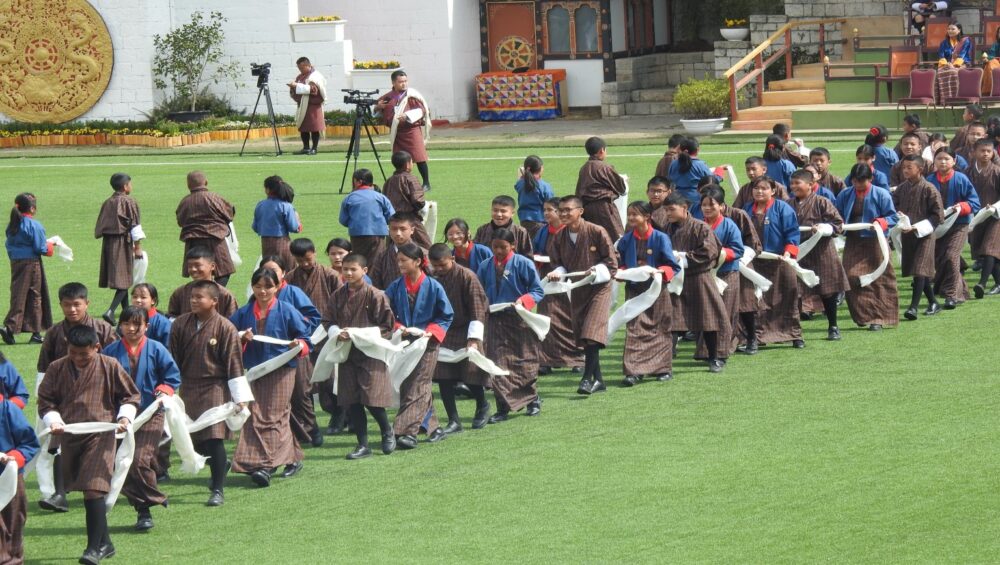
The Gho is worn by Bhutanese men and consists of a knee-length robe secured with a belt.

The Kira

The Kira is worn by Bhutanese women and is an elegant ankle-length garment often paired with colorful jackets and jewelry.

Unlike many countries where traditional dress is reserved for festivals, Bhutanese people regularly wear national attire to schools, government offices, ceremonies, and formal events.

For travelers, seeing traditional clothing in daily use highlights Bhutan’s commitment to preserving its cultural identity.

Farming and Rural Life in Bhutan

Agriculture remains a vital part of Bhutanese life.

Many families depend on farming for their livelihoods, particularly in rural regions.

Common agricultural activities include:

  • Rice cultivation
  • Potato farming
  • Apple orchards
  • Buckwheat production
  • Vegetable farming
  • Yak herding in high-altitude areas

Travelers visiting rural communities often witness traditional farming methods that have been practiced for generations.

These agricultural landscapes not only support local communities but also contribute to Bhutan’s stunning scenery.

Bhutanese Food: Simple, Fresh, and Flavorful

Food is an essential part of Bhutanese culture and hospitality.

The most famous dish is Ema Datshi, made from chili peppers and local cheese.

Other popular dishes include:

  • Red Rice
  • Phaksha Paa (pork with chilies)
  • Jasha Maru (spicy chicken stew)
  • Kewa Datshi (potatoes and cheese)
  • Hoentay (buckwheat dumplings)

Meals are often prepared using locally sourced ingredients and shared among family members.

Visitors frequently discover that Bhutanese cuisine is both unique and memorable, especially for those who enjoy spicy food.

Archery: Bhutan’s National Sport

Archery is far more than a sport in Bhutan—it is an important social and cultural tradition.

Local tournaments attract entire communities and often include:

  • Traditional songs
  • Dancing
  • Friendly competition
  • Community celebrations

Targets are placed at remarkable distances, making Bhutanese archery particularly impressive to watch.

Attending an archery match offers travelers an authentic glimpse into Bhutanese social life.

Festivals: Celebrating Bhutan’s Living Culture

Bhutan’s famous Tshechus are among the most colorful cultural events in Asia.

These religious festivals feature:

  • Sacred mask dances
  • Traditional music
  • Elaborate costumes
  • Community gatherings
  • Spiritual blessings

Major festivals take place throughout the year in various regions of Bhutan.

Many travelers plan their visits around these celebrations because they provide unparalleled insight into Bhutanese culture and traditions.

Education and Modern Life in Bhutan

While Bhutan maintains strong cultural traditions, it has also made significant investments in education and development.

Today’s Bhutanese youth often balance:

  • Modern education
  • Technology
  • Traditional values
  • Cultural preservation

In cities such as Thimphu and Paro, visitors can observe this fascinating blend of old and new, where traditional architecture stands alongside modern businesses and cafes.

Why Travelers Are Drawn to Bhutan’s Way of Life

Many destinations offer beautiful landscapes, but few provide the opportunity to experience a culture that remains so deeply connected to its heritage.

Travelers visit Bhutan because they want to:

  • Experience authentic culture
  • Learn about Buddhist traditions
  • Explore rural communities
  • Escape mass tourism
  • Connect with local people
  • Discover a different way of life

Bhutan’s commitment to preserving its traditions creates experiences that are increasingly rare in today’s fast-changing world.

How Visitors Can Experience Traditional Bhutanese Life

If you want to experience authentic Bhutan during your trip, consider:

  • Staying in traditional farmhouses
  • Visiting local villages
  • Attending a Tshechu festival
  • Trying Bhutanese cuisine
  • Watching an archery match
  • Visiting monasteries and temples
  • Interacting with local families

These experiences often become the most meaningful memories of a Bhutan journey.

Experience Authentic Bhutan with Maebar Travel

At Maebar Travel, we believe that the best way to discover Bhutan is through its people and traditions.

Our carefully designed tours allow travelers to experience authentic Bhutanese life through cultural encounters, village visits, traditional farmhouses, local festivals, and immersive experiences that go beyond the usual tourist trail.

Whether you are visiting Bhutan for the first time or returning to explore more deeply, we can help you experience the heart of the Kingdom.

Final Thoughts

Traditional Bhutanese life is a remarkable blend of community, spirituality, culture, and simplicity.

For travelers seeking more than just sightseeing, Bhutan offers a rare opportunity to connect with a living culture that continues to thrive in the modern world.

The country’s traditions, values, and way of life are what truly set Bhutan apart—and they are often what visitors remember long after their journey ends.

Best Time to Visit Bhutan in 2026: A Local Guide for Weather, Festivals, Trekking & Budget Travel

Planning a trip to Bhutan in 2026 and wondering when to go? Before choosing your dates, explore our Bhutan Tour Packages designed around different seasons, interests, and travel styles.

As a Bhutanese tour operator, this is one of the questions we hear almost every day. The answer isn’t as simple as choosing the “best” month. Bhutan changes dramatically with the seasons, and the experience you have in April can feel completely different from a visit in July or January.

Some travelers dream of seeing snow-capped Himalayan peaks under crystal-clear skies. Others want to experience colorful Buddhist festivals, hike through rhododendron forests, photograph ancient monasteries, or simply enjoy a peaceful journey away from crowds.

The good news is that Bhutan can be visited year-round. The best time depends on what kind of traveler you are and what you hope to experience.

In this guide, we’ll share local insights on Bhutan’s weather, festivals, trekking seasons, travel costs, and the pros and cons of each time of year so you can choose the perfect season for your trip.


Quick Answer: When Is the Best Time to Visit Bhutan?

For most travelers, the best months to visit Bhutan are:

March to May (Spring)
September to November (Autumn)

These seasons offer:

  • Comfortable temperatures
  • Excellent mountain visibility
  • Beautiful landscapes
  • Major cultural festivals
  • Ideal trekking conditions

Many first-time visitors choose our Bhutan Cultural Tours to experience the country’s monasteries, traditions, and local way of life.


Spring in Bhutan (March to May)

Spring is one of the most beautiful times to travel in Bhutan.

As winter fades, valleys become green, forests burst into color, and mountain slopes are covered in blooming rhododendrons. Temperatures are pleasant during the day, making sightseeing and hiking comfortable.

One of the things visitors often tell us after a spring trip is how alive Bhutan feels during this season. Farmers begin working their fields, monasteries become busier, and the countryside is filled with vibrant colors.

Why Travelers Love Bhutan in Spring

  • Clear views of the Himalayas
  • Flowering rhododendron forests
  • Comfortable temperatures
  • Excellent photography conditions
  • Major cultural festivals

Spring is particularly popular for:

Local Tip

Late March through April is often the sweet spot. You’ll enjoy blooming landscapes while avoiding some of the larger autumn crowds.

Bhutan Festivals in Spring

One of the highlights of spring is the famous Paro Tshechu.

For several days, locals from across the country gather in traditional dress to witness sacred masked dances, receive blessings, and celebrate Bhutanese culture.

Many visitors describe attending a tshechu as one of the most memorable experiences of their trip because it offers a rare glimpse into Bhutan’s living Buddhist traditions.

If cultural immersion is important to you, spring is hard to beat.


Summer in Bhutan (June to August)

Summer is Bhutan’s monsoon season, and many travelers automatically dismiss it.

However, that can be a mistake.

While rainfall is more frequent, summer reveals a side of Bhutan that many visitors never see. Rice terraces become emerald green, forests are lush, waterfalls are at their strongest, and tourist numbers drop significantly.

Is Summer Worth Visiting?

Yes, especially if you value:

  • Lower travel costs
  • Fewer tourists
  • Greener landscapes
  • More authentic local experiences

The main trade-off is weather uncertainty. Some days may be sunny and beautiful, while others bring afternoon rain showers.

Local Tip

Punakha often remains a great destination during the monsoon season because of its lower elevation and lush scenery.


Autumn in Bhutan (September to November)

If we had to choose the most popular season among international travelers, it would be autumn.

This is when Bhutan enjoys clear blue skies, crisp mountain air, and some of the best Himalayan views of the year.

Photographers, trekkers, and nature lovers often consider autumn the perfect season to visit.

Why Autumn Is So Popular

  • Exceptional mountain visibility
  • Dry weather
  • Comfortable temperatures
  • World-class trekking conditions
  • Major cultural festivals

This season is ideal for travelers hoping to see Bhutan’s dramatic mountain scenery at its best.

Best Time for Trekking in Bhutan

For trekking enthusiasts, autumn is generally the top choice.

Popular routes such as the Druk Path Trek, Jomolhari Trek, and Dagala Thousand Lakes Trek offer spectacular conditions during these months.

The trails are usually dry, visibility is excellent, and the mountain views can be breathtaking.

Many experienced hikers specifically plan their Bhutan trip around October because it often provides the most reliable trekking weather.


Winter in Bhutan (December to February)

Winter is Bhutan’s most underrated season.

While temperatures can be cold in the mornings and evenings, sunny days are common and many popular destinations remain pleasant for sightseeing.

The biggest advantage?

Space.

You’ll find fewer visitors at monasteries, viewpoints, and cultural sites, allowing for a more peaceful travel experience.

Why Consider Bhutan in Winter?

  • Lower hotel rates
  • Fewer tourists
  • Peaceful monasteries
  • Beautiful mountain views
  • Better availability for guides and accommodations

Travelers who enjoy slow travel often discover that winter offers a more intimate side of Bhutan.

Local Tip

Punakha is usually much warmer than Thimphu and Paro during winter, making it an excellent addition to a winter itinerary.


Cheapest Time to Visit Bhutan in 2026

If budget is your primary concern, consider traveling during:

  • January
  • February
  • June
  • July
  • August

During these periods you may find:

  • Better hotel deals
  • More flexible itineraries
  • Greater availability
  • Fewer crowds

Which Season Is Right for You?

Choose Spring if you want:

  • Flowers and festivals
  • Mild temperatures
  • Great photography opportunities

Choose Summer if you want:

  • Fewer tourists
  • Green landscapes
  • Budget-friendly travel

Choose Autumn if you want:

  • The best trekking conditions
  • Clear Himalayan views
  • Major cultural festivals

Choose Winter if you want:

  • Quiet travel experiences
  • Better value
  • Peaceful monasteries and cultural sites

Final Thoughts

There is no single best time to visit Bhutan.

The real question is: what kind of experience are you looking for?

Some travelers fall in love with Bhutan’s colorful spring festivals. Others prefer autumn’s crystal-clear mountain views. Many are surprised by the peaceful charm of winter or the lush beauty of the monsoon season.

No matter when you visit, Bhutan offers something increasingly rare in today’s world: authentic culture, pristine landscapes, and a slower pace of life.

If you’re planning a Bhutan trip in 2026 and aren’t sure which season is right for you, our local experts can help you choose the best itinerary based on your interests, travel style, and budget. Explore our Bhutan Tour Packages or contact us to start planning your journey.

Bhutan Trip Cost in 2026: Complete Travel Budget Guide

If you’re planning a trip to Bhutan in 2026, one of the first questions you’ll ask is:

How much does a Bhutan trip really cost?

Bhutan is unlike any other destination in Asia. It is regulated, sustainable, and offers a controlled tourism model—meaning costs are more structured, but also transparent once you understand them.

This guide breaks down the real Bhutan travel cost in 2026, including flights, Sustainable Development Fund, hotels, transport, food, and sample itineraries based on real travel arrangements in Bhutan.


Quick Overview: Bhutan Trip Cost in 2026

Here is a realistic estimate for most travelers per person:

  • Budget Bhutan trip: $250 – $280 per day
  • Mid-range trip: $250 – $400 per day
  • Luxury Bhutan trip: $500+ per day

These costs typically include accommodation, meals, transport, guide services, and permits.


What Makes Bhutan Travel Expensive or Affordable?

Unlike most destinations, Bhutan follows a Sustainable Development Tourism model, which means all travelers must pay a daily government fee and book through a licensed tour operator.

Your total cost mainly depends on:

  • Number of travel days
  • Hotel category (budget vs luxury)
  • Season (peak vs off-season)
  • Group size (solo travel is more expensive)
  • Sustainable Development Fee (SDF) in 2026

Sustainable Development Fee (SDF) in 2026

The most important cost in Bhutan is the government Sustainable Development Fee (SDF).

Current SDF:
$100 per person per day

What it supports:

  • Free healthcare and education in Bhutan
  • Environmental conservation
  • Preservation of culture and heritage
  • Low-impact tourism model

While it increases the total trip cost, it is also what keeps Bhutan clean, peaceful, and uncrowded.


Flight Cost to Bhutan (2026)

Flights to Bhutan usually land at Paro International Airport.

Estimated flight prices:

  • From India: $200 – $500
  • From Thailand/Nepal: $400 – $800
  • From Europe/USA: $800 – $1,500+

💡 Tip: Booking early can significantly reduce airfare, especially during peak seasons (March–May and September–November).


Hotel Costs in Bhutan

Bhutan offers a wide range of accommodations:

  • Budget hotels: $30 – $60 per night
  • 3-star hotels: $60 – $150 per night
  • Luxury resorts: $250 – $800+ per night

Most Bhutan tour packages already include accommodation, which makes planning easier and more cost-efficient.


Transport & Guide Costs in Bhutan

Independent travel in Bhutan is not common. Most travelers book through a licensed local agency.

A standard package includes:

  • Private vehicle with driver
  • Licensed English-speaking guide
  • All internal transport

This ensures a smooth, safe, and well-organized travel experience across Bhutan’s mountainous terrain.


Food Costs in Bhutan

Food is usually included in most tour packages, but if you eat separately:

  • Local meals: $10 – $15
  • Tourist restaurants: $15 – $25

Must-try Bhutanese dishes:

  • Ema Datshi (chili & cheese)
  • Red rice
  • Butter tea

Hidden Costs You Should Know

Many travelers forget to include these:

  • Bhutan visa fee: $40 (non-refundable)
  • Monument entrance fees (usually included in packages)
  • Travel insurance
  • Tips for guides and drivers

Total Estimated Bhutan Trip Cost (5 Days Example)

Here’s a realistic breakdown for 5 days:

  • Visa fee: $40
  • SDF: $400
  • Hotels, guide, meals & transport: $1,440
  • Flights: $300 – $800

Total estimated cost:
$1,300 – $2,500 per person


Sample 5-Day Bhutan Itinerary (Value Example)

A typical 5-day Bhutan trip includes:

Day 1: Arrival in Paro – Transfer to Thimphu sightseeing
Day 2: Thimphu to Punakha sightseeing
Day 3: Punakha to Paro sightseeing
Day 4: Tiger’s Nest hike
Day 5: Departure


How to Save Money on a Bhutan Trip

If you want a more affordable Bhutan trip in 2026:

  • Travel in a group (split transport costs)
  • Visit during off-season (Dec–Feb or June–Aug)
  • Choose standard 3-star hotels instead of luxury resorts
  • Keep itinerary 4–5 days
  • Book through a trusted local Bhutan operator

FAQs: Bhutan Travel Cost 2026

Is Bhutan expensive to visit?

Bhutan is not a budget destination, but it offers high-value, all-inclusive travel experiences.

Can I travel Bhutan on a low budget?

Yes, but the SDF makes it a mid-range destination even for budget travelers.

How many days are enough for Bhutan?

4–7 days is ideal for first-time visitors.

Is Bhutan worth the cost?

Yes—Bhutan offers one of the most unique, peaceful, and culturally rich travel experiences in the world.


Plan Your Bhutan Trip

Planning Bhutan can feel complicated due to permits, SDF, and package structure.

If you need help, you can get:

  • Custom Bhutan itineraries
  • Budget-based travel planning
  • Hotel + transport arrangements
  • Visa and permit assistance

Ready to visit Bhutan? Explore our Bhutan Tour Packages or Contact Us for a free, customized itinerary based on your budget, travel dates, and interests.