There are places that look beautiful in photographs, and then there are places that make you reach for your camera almost every few minutes.
Bhutan is very much the second kind.
You might be driving along a mountain road when the clouds suddenly part to reveal snow-covered Himalayan peaks. A little later, you may find yourself standing in front of an ancient dzong, watching sunlight fall across its whitewashed walls and golden roofs. In a quiet village, an elderly farmer might be working in the fields while prayer flags flutter above a traditional Bhutanese farmhouse.
And if you visit at the right time of year, you could find yourself photographing black-necked cranes in a peaceful Himalayan valley.
For photographers, Bhutan offers something quite special. It is not just about dramatic scenery or famous landmarks. It is about the relationship between the landscape, the people, the architecture, the wildlife and the traditions that continue to shape everyday life.
Whether you enjoy landscape photography, cultural photography, wildlife photography or simply taking beautiful travel photographs, Bhutan offers countless opportunities to create images with a sense of place.
At Maebar Travel, we often help travellers plan journeys around the experiences they most want to photograph. And one question comes up regularly:
Where are the best places for photography in Bhutan, and when should you visit?
Here is our guide to photographing Bhutan’s landscapes, culture and wildlife, including the locations, seasons and practical tips that can help you make the most of your journey.
Why Is Bhutan Such a Special Destination for Photographers?
Bhutan’s appeal lies in its variety.
Within one journey, you can photograph forested mountains, terraced fields, rivers, traditional villages, historic fortresses, Buddhist monasteries and vibrant religious festivals.
The scenery changes as you travel between valleys and elevations. The architecture reflects centuries of craftsmanship, while the country’s Buddhist traditions remain visible in everyday life.
For a photographer, that creates opportunities to tell a much richer story than a collection of scenic images alone.
You can capture the sweeping view from a mountain pass in the morning, explore the architectural details of a dzong in the afternoon and photograph the atmosphere of a traditional market later in the day.
Bhutan is particularly rewarding for:
- Landscape photographers looking for Himalayan mountain views, misty valleys and rural scenery.
- Cultural photographers interested in Bhutanese traditions, architecture, festivals and daily life.
- Wildlife photographers hoping to photograph Himalayan birds and other native species.
- Travel photographers who enjoy combining people, landscapes, food, architecture and local experiences.
- Amateur photographers who want to improve their skills while exploring a destination at a comfortable pace.
The best photographs often come when you allow yourself enough time to observe a place rather than rushing from one attraction to another.
1. Paro Valley: Traditional Architecture and Himalayan Scenery
Paro is one of the best places to begin a photography journey in Bhutan.
The valley combines traditional Bhutanese architecture, fertile agricultural land, mountain scenery and some of the country’s most recognisable cultural landmarks.
It is also home to Paro International Airport, making it a natural starting point for most visitors.
Tiger’s Nest Monastery: Bhutan’s Most Iconic Photography Location
Taktsang Monastery, widely known as Tiger’s Nest, is perhaps the most recognisable image of Bhutan.
Perched dramatically on a cliff above Paro Valley, the monastery appears to cling to the mountainside, surrounded by forest and steep rock faces.
For landscape photographers, the classic view is only part of the experience. The walking trail offers different perspectives of the monastery, the surrounding mountains and the forested valley below.
The changing light can make a considerable difference to your photographs. Depending on the weather, you may find soft morning light, dramatic clouds or a beautiful contrast between the white monastery walls and the dark green forest.
A few photography tips for Tiger’s Nest:
- Bring a versatile zoom lens so you can photograph both the wider landscape and architectural details.
- Look for compositions that include trees, rocks or prayer flags in the foreground.
- Be patient with changing cloud cover rather than expecting the same conditions throughout the hike.
- Allow enough time for the walk and breaks instead of treating it as a quick photography stop.
Remember that visiting Tiger’s Nest involves a substantial uphill hike. The effort is part of the experience, and the best approach is to enjoy the journey as well as the photographs.
Photography restrictions apply inside sacred areas, so always follow local instructions and your guide’s advice.
Rinpung Dzong: Photographing Bhutanese Architecture
Rinpung Dzong is another excellent photography location in Paro.
Its impressive white walls, traditional wooden windows and intricate architectural details offer plenty of opportunities for architectural photography.
Step back to capture the structure within its setting, then look closer at the carved woodwork, painted details and traditional construction.
The surrounding landscape adds another dimension, particularly when the light is soft.
For photographers interested in Bhutanese architecture, Rinpung Dzong is an excellent place to explore how religious and historical buildings fit into the wider landscape.
Paro’s Traditional Streets and Farmland
Some of the most rewarding photographs in Paro may come away from the major landmarks.
Traditional farmhouses, cultivated fields, village paths and everyday activity offer a more personal view of the valley.
Spring brings fresh growth and flowering trees in suitable locations, while autumn can offer golden agricultural landscapes around harvest time.
These quieter scenes are especially appealing if you enjoy documentary-style travel photography.
2. Punakha Valley: Rivers, Rice Fields and One of Bhutan’s Most Beautiful Dzongs
If you are searching for the best places for landscape photography in Bhutan, Punakha deserves a place near the top of your list.
Located at a lower elevation than many of Bhutan’s western valleys, Punakha has a warmer climate, fertile farmland and a landscape shaped by its rivers.
The valley is particularly photogenic because it combines natural scenery with traditional architecture and rural life.
Punakha Dzong: A Classic Bhutan Photography Spot
Punakha Dzong stands at the confluence of the Pho Chhu and Mo Chhu rivers.
Its white walls, timber details and golden roof create a striking contrast with the surrounding water, mountains and vegetation.
It is one of Bhutan’s most rewarding locations for architectural photography.
Rather than taking only the familiar postcard photograph, look for different ways to frame the dzong.
Try including the rivers in the foreground, capturing the building from different permitted viewpoints or focusing on the architectural details that make it distinctive.
Spring can be especially attractive when the jacaranda trees around the dzong bloom, adding colour to the setting.
Photographing Punakha’s Rural Landscapes
Beyond the dzong, Punakha offers a quieter side of Bhutan.
Rice terraces, farmhouses, village paths and cultivated fields create opportunities for photographs that show the relationship between the people and the land.
Early morning and late afternoon are particularly good times to look for softer light across the fields.
If you enjoy photographing rural life, consider allowing time for a guided village walk rather than limiting your visit to the main sightseeing stops.
Always ask permission before photographing people at close range, especially when you are visiting someone’s home or workplace.
The Punakha Suspension Bridge
Punakha’s suspension bridge is another interesting location for travel photography.
Prayer flags, the river below and the surrounding hills create a layered composition that works well for wide-angle images.
You can also photograph people crossing the bridge, provided you do so respectfully and without obstructing their way.
The combination of movement, colour and scenery makes it a useful location for storytelling photographs.
3. Dochula Pass: Himalayan Mountain Photography
For photographers hoping to capture the Himalayas, Dochula Pass is one of the most rewarding stops on the journey between Thimphu and Punakha.
The pass is known for its collection of 108 chortens and its panoramic mountain views on clear days.
The setting offers two different photographic subjects: the religious monuments in the foreground and the distant Himalayan range beyond them.
When the weather is clear, the mountain panorama can be spectacular. On other days, drifting clouds and mist create a more atmospheric scene.
This unpredictability is part of photographing mountains in Bhutan.
How to Photograph Dochula Pass
Try a wide-angle lens to capture the chortens and mountain landscape together.
If the distant peaks are visible, a longer focal length can help isolate individual ridgelines and create a more compressed mountain composition.
You can also experiment with different perspectives around the chortens, always remaining within permitted areas and respecting the religious setting.
Early morning can offer beautiful light, but visibility depends on weather conditions. A clear forecast does not guarantee that the mountains will be visible at the exact moment you arrive.
If photography is a priority, ask your guide whether your itinerary can allow some flexibility around the stop.
Sometimes a little patience makes all the difference.
4. Phobjikha Valley: Wide Landscapes and Black-Necked Cranes
Phobjikha Valley, near Gangtey in central Bhutan, offers a very different photographic experience from the more developed valleys of western Bhutan.
The broad glacial valley is known for its open grasslands, surrounding hills, traditional settlements and peaceful atmosphere.
There are no dramatic city skylines here. Instead, the beauty lies in the sense of space.
For landscape photographers, Phobjikha is an excellent place to work with layers, natural lines and changing light.
The valley can be particularly beautiful in the early morning, when mist settles across the landscape, or in the late afternoon, when the light softens over the hills.
Where to Photograph Black-Necked Cranes in Bhutan
Phobjikha is also one of Bhutan’s best-known destinations for wildlife photography.
The valley is an important winter habitat for the endangered black-necked crane, which migrates to Bhutan from the Tibetan Plateau.
These elegant birds typically arrive around late October or November and depart around February or March, although the timing varies with conditions.
During the winter season, photographers may have opportunities to observe the cranes in the valley and learn about their conservation at the local crane information centre.
For the best wildlife photography experience:
- Visit during the wintering season.
- Bring a telephoto lens to photograph birds without approaching them too closely.
- Use patience rather than trying to force a closer encounter.
- Follow local guidance and stay within permitted viewing areas.
- Avoid disturbing the birds, particularly when they are feeding or resting.
Wildlife sightings and photographic conditions cannot be guaranteed. The birds are wild animals, and their movements depend on natural conditions.
Even if you do not photograph a crane at close range, Phobjikha’s open landscapes and quiet rural atmosphere make it worthwhile for landscape and travel photography.
Photographing Gangtey and the Surrounding Countryside
Gangtey Monastery provides an architectural focal point above the valley.
The surrounding countryside offers opportunities to photograph traditional homes, fields, footpaths and the daily rhythm of rural life.
If you are visiting during winter, you may find the landscape more muted and atmospheric. During warmer months, the valley can appear greener and more vibrant.
Both have their own photographic appeal.
For anyone planning a Bhutan wildlife photography tour, Phobjikha is a particularly valuable addition to an itinerary that also includes cultural and landscape photography.
5. Thimphu: Street Photography and Everyday Bhutanese Life
Bhutan’s capital offers a different set of photographic opportunities.
Thimphu combines modern shops and cafés with traditional architecture, religious monuments, markets and everyday community life.
For travel photographers, it is an opportunity to move beyond mountain scenery and capture how Bhutan looks and feels today.
Buddha Dordenma
The enormous Buddha Dordenma statue overlooks the Thimphu Valley.
Its scale makes it an impressive subject, particularly when photographed with the surrounding hills and cityscape.
Try photographing the statue within the wider landscape rather than focusing only on its size.
The views over Thimphu can also provide opportunities for panoramic photographs.
Memorial Chorten and Local Markets
The National Memorial Chorten is an important religious landmark where you can observe people coming to pray, walk around the stupa and use the prayer wheels.
It can be a meaningful location for cultural photography, but it is important to remember that people are there for religious reasons.
Be discreet, keep your distance where appropriate and ask permission before taking close-up portraits.
Local markets offer another perspective on life in Thimphu. Depending on the day and season, you may find fresh produce, traditional foods, local crafts and interactions between vendors and customers.
Look for the details that tell a story: the arrangement of vegetables, colourful textiles, hands preparing food or the textures of traditional materials.
These photographs can be just as memorable as the grand Himalayan landscapes.
Traditional Crafts and Textiles
Bhutanese textiles, painting, woodwork and other traditional crafts are visually rich subjects.
If you are interested in photographing artisans at work, look for opportunities to visit craft centres or workshops where photography is permitted.
Ask before photographing people, and avoid interrupting their work to arrange a picture.
A photograph that captures a genuine working moment can communicate far more about Bhutan than a staged image.
6. Haa Valley: Quiet Villages and Less-Visited Landscapes
If you want to photograph a quieter side of Bhutan, Haa Valley is worth considering.
Located in western Bhutan, the valley offers forested hills, traditional settlements, open countryside and a more peaceful atmosphere than some of the country’s best-known destinations.
For photographers, the appeal lies in the details as much as the scenery.
You may find traditional houses surrounded by fields, mountain roads winding through the landscape, or village scenes that invite you to slow down and observe.
Haa can be particularly rewarding for travellers who enjoy combining landscape photography with cultural encounters.
Weather conditions can change quickly in mountainous areas, so flexibility is important.
Rather than planning every photograph in advance, leave time to stop when the light or scenery catches your attention.
That is often when the most personal travel photographs happen.
7. Bhutan’s Festivals: A Unique Opportunity for Cultural Photography
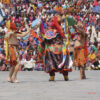
Bhutan’s festivals, known as Tshechus, offer some of the country’s most colourful photographic experiences.
Masked dancers, elaborate costumes, traditional instruments, monastery courtyards and crowds dressed in their finest kira and gho create a remarkable visual setting.
For cultural photographers, festivals provide opportunities to document Bhutanese traditions that remain important to local communities.
Paro Tshechu, Thimphu Tshechu and Punakha’s festivals are among the better-known options, although the best festival for your trip depends on your travel dates and interests.
How to Photograph a Bhutanese Festival Respectfully
A Tshechu is not simply a performance arranged for visitors. It is a religious and community occasion.
Good festival photography starts with understanding that distinction.
Here are a few things to remember:
- Arrive early enough to find a suitable position without pushing through the crowd.
- Use a telephoto lens when you need to photograph performers from a distance.
- Avoid using flash during religious performances.
- Never obstruct the view of local people or interrupt a ceremony.
- Ask permission before taking close-up photographs of individuals.
- Follow your guide’s advice about areas where photography is restricted.
Also, look beyond the dancers.
The people watching, the details of traditional clothing, the atmosphere in the courtyard and the interactions between family members can all tell a richer story.
If festivals are a major reason for your visit, read our guide to Bhutanese Festivals: What It’s Really Like to Attend a Tshechu.
8. Wildlife Photography in Bhutan: Beyond the Famous Landscapes
Bhutan is not only a destination for mountain and cultural photography. Its varied habitats also support a remarkable range of wildlife.
For photographers interested in birds and mammals, the country offers opportunities to explore a different side of the Himalayas.
Phobjikha Valley is the best-known destination for photographing wintering black-necked cranes, but wildlife experiences extend well beyond this one valley.
Depending on the region, season and itinerary, photographers may have opportunities to observe Himalayan birds, forest species and other native wildlife.
What Wildlife Can You Photograph in Bhutan?
Possible subjects include:
- Black-necked cranes in Phobjikha Valley during their wintering season.
- Himalayan birdlife in forested areas and mountain habitats.
- Birds of prey and other bird species, depending on location and season.
- Native mammals in suitable habitats, although many are elusive and difficult to see.
Species sightings are never guaranteed, particularly for animals that avoid human activity.
If wildlife photography is your main interest, it is worth discussing your target species with your tour operator before choosing an itinerary.
Some locations are better suited to birdwatching, while others require longer journeys, specialised arrangements or more time in the field.
Responsible Wildlife Photography
A good wildlife photograph should never come at the expense of the animal.
Keep a respectful distance, avoid disturbing feeding or nesting behaviour, and follow local guidance about where you can walk.
Do not attempt to approach wildlife simply to fill the frame.
A longer lens, patience and a little luck will usually serve you better.
For photographers, the experience of observing an animal behaving naturally is often more rewarding than getting the closest possible photograph.
When Is the Best Time to Visit Bhutan for Photography?
There is no single best season for every type of photography in Bhutan.
The ideal time depends on whether you are interested in mountain views, flowers, green landscapes, festivals or wildlife.
Spring: March to May
Spring is a wonderful time for landscape and cultural photography.
Depending on the location and elevation, you may find flowering trees, rhododendron blooms, fresh greenery and pleasant conditions for exploring valleys and monasteries.
Paro Tshechu also usually takes place in spring, although exact dates vary each year.
Spring is a strong choice if you want to combine colourful cultural experiences with scenic landscapes.
Summer: June to August
Summer brings the monsoon to many parts of Bhutan.
Rain and cloud can make mountain views less predictable, but the countryside often becomes lush and green.
Rice fields, forests, waterfalls and mist-covered valleys can create beautiful atmospheric photographs.
If you enjoy moody landscapes and do not mind adjusting your plans around the weather, summer can be rewarding.
The trade-off is that heavy rain or low visibility may affect some photography opportunities.
Autumn: September to November
Autumn is often one of the most appealing seasons for Himalayan landscape photography.
Conditions can provide clear mountain views, golden agricultural scenery and excellent opportunities to photograph traditional festivals.
The Thimphu Tshechu takes place around this period, depending on the annual calendar.
Late autumn also marks the arrival of black-necked cranes in Phobjikha, although their precise arrival varies.
For travellers hoping to combine mountains, culture and the beginning of the crane season, autumn can be an excellent choice.
Winter: December to February
Winter offers a quieter atmosphere in many parts of Bhutan.
Clear days can provide impressive mountain views, while colder mornings may bring frost and beautiful light across the valleys.
It is also the main period for observing wintering black-necked cranes in Phobjikha.
The trade-off is colder weather, particularly at higher elevations, and the possibility of snow or difficult conditions on some routes.
Which Season Is Best for Your Photography Interests?
| If you want to photograph… | Consider travelling in… |
|---|---|
| Himalayan landscapes and mountain views | Autumn or winter, depending on weather |
| Flowers and fresh spring scenery | March to May |
| Green valleys and misty forests | June to August |
| Bhutanese festivals and masked dances | Spring or autumn, according to festival dates |
| Black-necked cranes | Winter, generally November to February |
| Rural life and traditional architecture | Throughout the year |
These are general seasonal guidelines, not guarantees. Bhutan’s weather varies by elevation and region, so it is always worth building some flexibility into a photography itinerary.
Photography Tips for Your Bhutan Trip
You do not need an expensive professional camera to take memorable photographs in Bhutan.
A smartphone or entry-level camera can capture wonderful images. What matters most is understanding the light, taking your time and being observant.
However, a little preparation can help you make the most of your trip.
1. Choose Versatile Camera Equipment
If you use a camera with interchangeable lenses, consider bringing:
- A wide-angle lens for landscapes, architecture and mountain scenery.
- A standard zoom lens for everyday travel and cultural photography.
- A telephoto lens for wildlife, birds and distant mountain details.
- Spare batteries and memory cards.
- A lightweight tripod if it suits your itinerary and photography style.
- A protective bag or cover for rain, dust and changing weather.
You do not need to carry every piece of equipment available. Choose gear that you can comfortably use throughout the day.
2. Pay Attention to Light
Early morning and late afternoon often provide softer light for landscapes and architecture.
Midday light can be harsh, but it can still work well for details, market scenes and photographs with strong contrast.
In the mountains, clouds can change the entire mood of a scene within minutes.
Be ready to adapt rather than relying on one perfect moment.
3. Leave Time for Unexpected Stops
Some of Bhutan’s most memorable photographs happen between the places listed on an itinerary.
It might be a view across a valley, a farmhouse beside a field or a line of prayer flags moving in the wind.
If photography is important to you, allow enough time to stop safely when an opportunity arises.
A flexible itinerary is often more useful to a photographer than a schedule packed with sightseeing.
4. Respect Local Customs
Bhutan’s monasteries, temples and dzongs are living religious spaces.
Photography is restricted inside many sacred prayer halls and temple interiors. Rules vary by location, so check before taking pictures.
Dress respectfully, remain quiet where appropriate and follow your guide’s instructions.
When photographing people, ask permission rather than assuming that everyone wants to be included in your images.
5. Be Prepared for Changing Weather
Mountain weather can be unpredictable.
Carry a waterproof layer for yourself and suitable protection for your camera equipment. If you are travelling during winter, bring warm clothing for early mornings and outdoor photography.
It is also sensible to keep spare batteries warm in cold conditions.
Most importantly, do not let changing weather spoil your experience. Mist, clouds and soft light can create photographs that are every bit as memorable as a perfectly clear mountain panorama.
How to Plan a Bhutan Photography Tour
If you are travelling primarily to take photographs, your itinerary deserves a little more thought than a standard sightseeing holiday.
The best photography trips balance iconic locations with quieter experiences, while leaving enough time to work with changing light and weather.
A route combining Paro, Thimphu, Punakha, Phobjikha and Haa Valley can provide an excellent introduction to Bhutan’s landscapes, architecture, culture and wildlife.
For example, a photography-focused journey might include:
- Paro for Tiger’s Nest, Rinpung Dzong and traditional valley scenery.
- Thimphu for architecture, markets, religious landmarks and everyday life.
- Dochula Pass for mountain views and its collection of chortens.
- Punakha for rivers, rice fields, traditional villages and Punakha Dzong.
- Phobjikha Valley for open landscapes and seasonal black-necked crane photography.
- Haa Valley for quieter countryside and traditional settlements.
The exact route should depend on the season, your photographic interests and how much time you have available.
A wildlife photographer may prefer to spend additional time in suitable habitats, while someone interested in architecture and cultural photography may want longer visits to dzongs, villages and traditional craft centres.
A local guide can also help you understand the places you are photographing, identify appropriate viewpoints and navigate cultural etiquette.
If you are looking for a trip designed around photography rather than conventional sightseeing, explore our Bhutan Photography Journey.
Is Bhutan Worth Visiting for Photography?
Absolutely, particularly if you enjoy photographing more than just scenery.
Bhutan offers the chance to combine Himalayan landscapes with living traditions, historic architecture, rural life and distinctive wildlife.
You can spend a morning photographing a mountain panorama and an afternoon exploring the details of a traditional dzong. You can experience a colourful festival, walk through a quiet village or wait patiently for birds in a peaceful valley.
The variety is what makes the country so rewarding.
Bhutan is not always predictable. Clouds may hide the mountains, rain may change your plans and wildlife may remain out of sight.
But photography is not only about collecting perfect images.
It is also about learning to observe, being patient and discovering the details that make a place different from anywhere else.
Sometimes the photograph you remember most will be the one you did not plan to take.
Planning Your Bhutan Photography Journey?
At Maebar Travel, we believe the best way to explore Bhutan is to create a journey that reflects your interests rather than simply following a checklist of attractions.
For photographers, that means choosing the right locations, travelling in a suitable season and allowing time to experience the country at a comfortable pace.
Whether you want to photograph the dramatic cliffs of Tiger’s Nest, the riverside beauty of Punakha Dzong, the open landscapes of Phobjikha Valley or the colours of a Bhutanese festival, we can help you plan a journey around your priorities.
Our Bhutan Photography Journey combines some of the country’s most photogenic destinations, including Paro, Thimphu, Punakha, Gangtey and Haa Valley.
Ready to photograph Bhutan?
Tell us when you would like to travel and what you most want to photograph. We can help you plan a Bhutan journey that brings together landscapes, culture, architecture and wildlife.
Explore Our Bhutan Photography Journey
Frequently Asked Questions
What are the best places for photography in Bhutan?
Some of the best places for photography in Bhutan include Tiger’s Nest Monastery in Paro, Punakha Dzong, Dochula Pass, Phobjikha Valley, Thimphu and Haa Valley. Each offers different opportunities, from Himalayan landscapes and traditional architecture to wildlife and cultural photography.
When is the best time to visit Bhutan for photography?
Spring and autumn are popular choices because they offer opportunities to combine scenic landscapes with cultural experiences. Autumn and winter can also provide excellent mountain views when conditions are clear. Winter is particularly suitable for photographers hoping to see black-necked cranes in Phobjikha Valley.
Where can I photograph black-necked cranes in Bhutan?
Phobjikha Valley, near Gangtey, is Bhutan’s best-known destination for black-necked crane photography. The birds typically winter there from around late October or November until February or March. Their arrival and departure vary, and sightings cannot be guaranteed.
Is Bhutan suitable for amateur photographers?
Yes. Bhutan is suitable for photographers of different experience levels. You can enjoy the scenery and cultural attractions with a smartphone, while photographers using more advanced equipment can explore landscapes, architectural details, festivals and wildlife.
How many days do I need for a photography tour in Bhutan?
Around 7–10 days can provide a good introduction to western Bhutan’s main photography locations, including Paro, Thimphu and Punakha. A longer trip allows more time for Phobjikha Valley, Haa Valley, wildlife photography and changing weather conditions.
Can I photograph monks and local people in Bhutan?
Yes, when appropriate, but you should ask permission before taking close-up photographs of people. Be particularly considerate in religious settings, during prayers and at festivals. Always follow local guidance and respect anyone who does not wish to be photographed.
Can I take photographs inside Bhutanese monasteries and dzongs?
Photography is prohibited in many sacred prayer halls and temple interiors, although rules differ between locations. Check with your guide or local authorities before taking photographs, and follow all posted restrictions.
What camera equipment should I bring to Bhutan?
A versatile camera or smartphone is sufficient for most travellers. If you use a dedicated camera, a wide-angle lens is useful for landscapes and architecture, while a telephoto lens helps with wildlife and distant subjects. Spare batteries, memory cards and weather protection are also useful.
Can I combine landscape, cultural and wildlife photography in one Bhutan trip?
Yes. A carefully planned itinerary can combine Paro and Punakha for landscapes and architecture, Thimphu for cultural photography, and Phobjikha Valley for seasonal wildlife opportunities. The best route depends on your travel dates and photographic priorities.
Does Maebar Travel offer a Bhutan photography tour?
Yes. Maebar Travel offers a guided Bhutan Photography Journey featuring destinations such as Paro, Thimphu, Punakha, Gangtey and Haa Valley. Visit our Bhutan Photography Journey page for the itinerary and booking details.