Planning a trip to Bhutan? Understanding a few important Bhutanese etiquette and cultural customs can help you travel with confidence while showing respect for the people, traditions, and sacred places you encounter. For more practical information to help you prepare for your journey, explore our Bhutan travel guide.
Bhutan is more than dramatic Himalayan landscapes, ancient monasteries, colorful festivals, and spectacular mountain roads. It is a country where Buddhist traditions, family values, community life, and respect for nature remain deeply woven into everyday life.
For first-time visitors, understanding Bhutanese customs and etiquette can also help avoid small cultural mistakes—especially when visiting temples, monasteries, dzongs, villages, and local homes.
From what to wear in Bhutan and how to behave inside a monastery to photography etiquette and the correct way to walk around a stupa, here are 15 important Bhutan travel etiquette tips to know before your trip.
Quick Answer: What Etiquette Should Travelers Follow in Bhutan?
Travelers visiting Bhutan should dress modestly at religious sites, remove hats and shoes when appropriate, ask permission before photographing people, remain quiet inside temples and monasteries, avoid touching religious objects, walk clockwise around stupas and prayer wheels, respect local beliefs, and follow the instructions of their guide or host.
You do not need to be an expert in Bhutanese culture. A little awareness, patience, and respect go a long way.
1. Dress Modestly When Visiting Religious Sites
One of the most important things to know about what to wear in Bhutan is that everyday clothing and religious-site clothing are not necessarily the same.
Bhutan does not impose a general dress code on tourists. However, when visiting temples, monasteries, dzongs, and other places of religious significance, visitors are expected to wear respectful clothing covering the shoulders and knees.
For your Bhutan trip, consider packing:
- Long trousers or comfortable pants
- Long skirts or dresses that cover the knees
- Shirts or tops covering the shoulders
- A light jacket or shawl
- Comfortable shoes that can be removed easily
Avoid entering religious sites wearing very short shorts, crop tops, or revealing clothing.
Travel tip: Keep a lightweight scarf or jacket in your day bag. It can quickly make an otherwise casual outfit more appropriate for visiting a temple.
2. Remove Your Shoes When Required
Shoes should be removed before entering certain temples and sacred interiors.
The same principle can apply when entering a Bhutanese home. The official tourism guidance notes that Bhutanese commonly remove their shoes before entering houses.
Pay attention to your guide and observe what local people are doing.
If everyone is leaving their shoes outside, follow their example.
Good Bhutan travel etiquette: Wear clean socks, particularly during cooler months, because temple floors can be cold.
3. Be Quiet Inside Temples and Monasteries
Religious sites in Bhutan are not simply tourist attractions. They remain active places of worship.
When visiting a monastery, temple, dzong, or other sacred location:
- Speak quietly
- Silence your phone
- Avoid unnecessary conversations
- Do not disturb people who are praying
- Follow instructions from your guide
- Give worshippers space
Bhutan Tourism specifically asks visitors to maintain silence at sacred sites as a sign of respect for the country’s religious traditions.
This is one of the easiest ways to show cultural respect while traveling in Bhutan.
4. Always Ask Before Taking Someone’s Photograph
Bhutan is incredibly photogenic. From monks and farmers to traditional architecture and colorful markets, it can be tempting to photograph everything you see.
But Bhutanese photography etiquette is simple: ask permission before photographing people.
A friendly:
“May I take a photo?”
can make the experience much more respectful.
The official Bhutan tourism guidance also recommends asking before photographing citizens and being particularly mindful when people are praying or participating in religious festivals.
Remember that a person is not simply another part of the landscape.
5. Do Not Photograph Inside Sacred Altar Rooms
One of the most common questions travelers ask is:
Can you take photos inside Bhutanese temples?
The answer depends on the location, but photography is generally prohibited inside sacred altar rooms and certain religious interiors.
Bhutan Tourism advises visitors not to take photographs inside sacred sites and specifically asks travelers not to obstruct people practicing their faith.
Always ask your guide if photography is permitted before taking out your camera.
When photography is not allowed, put the camera away and enjoy the experience without it.
Sometimes the memories you do not photograph are the ones you remember most.
6. Never Touch Religious Objects Without Permission
Prayer wheels, statues, paintings, thrones, ritual objects, and other religious items should be treated with respect.
Do not touch them simply because they look interesting.
Inside temples, avoid:
- Touching statues
- Touching religious paintings
- Leaning on sacred objects
- Sitting on religious thrones
- Moving ritual objects
- Entering restricted areas
Bhutan’s official tourism guidance specifically asks visitors not to touch religious items or paintings and not to sit on sacred thrones inside temples.
When in doubt, ask your guide.
7. Walk Clockwise Around Stupas and Chortens
If you see people walking around a stupa, chorten, or shrine, you may notice that they move in a particular direction.
The traditional practice is to circumambulate Buddhist sacred objects clockwise.
Prayer wheels should also be turned clockwise.
This is an important part of Bhutan Buddhist etiquette and is something travelers should understand before visiting monasteries, villages, and religious monuments.
Rather than rushing through a sacred site, take your time and observe what local people are doing.
8. Remove Your Hat or Cap at Sacred Places
A small gesture can communicate a great deal of respect.
Bhutan Tourism recommends removing caps and hats when visiting sacred sites or meeting elders.
So if you are wearing:
- A baseball cap
- Sun hat
- Beanie
- Other headwear
be prepared to remove it when entering an appropriate sacred or formal setting.
This is particularly important when visiting monasteries, temples, dzongs, and meeting respected elders.
9. Learn a Few Bhutanese Words
You do not need to learn Dzongkha before visiting Bhutan, but knowing a few words can make interactions warmer.
Two useful expressions are:
Kuzu zangpo la — Hello
Kadrin chey la — Thank you
The word “la” is commonly used as a respectful expression in Bhutanese conversation.
You may not pronounce everything perfectly—and that is okay.
Making the effort is what matters.
A simple “Kuzu zangpo la” accompanied by a smile is a wonderful way to begin a conversation.
10. Respect Bhutanese Homes and Local Communities
If you are invited into someone’s home, treat the invitation as a privilege rather than a sightseeing opportunity.
Remove your shoes when appropriate, follow your host’s lead, and avoid photographing private spaces without permission.
You may also be offered food or drink.
Bhutanese hospitality is an important part of the country’s culture, and visitors may encounter customs that are different from what they are accustomed to at home.
For example, traditional etiquette can involve politely refusing an initial offer of food before eventually accepting.
The best approach is to watch your host and follow your guide’s advice.
When traveling in Bhutan, being observant is often more useful than trying to memorize every rule.
11. Respect Monks, Nuns, Elders, and Religious Practitioners
Bhutan is deeply influenced by Vajrayana Buddhism, and monks and nuns occupy an important place in religious and cultural life.
When interacting with monks, nuns, or elders:
- Speak respectfully
- Do not interrupt prayers
- Give them personal space
- Ask before taking photographs
- Follow instructions at religious sites
- Avoid casual behavior around sacred ceremonies
If you are seated on the floor with a monk, nun, elder, or host, Bhutan Tourism advises sitting cross-legged as a respectful posture.
Small gestures of consideration can make a significant difference.
12. Never Stand Between Worshippers and an Altar
This is an easy etiquette mistake for photographers and first-time visitors.
If someone is praying or making an offering, do not walk directly between them and the altar simply to get somewhere faster or capture a photograph.
Bhutan Tourism specifically advises travelers not to stand between religious observers and an altar or obstruct their ability to practice their faith peacefully.
Wait patiently or take another route.
In Bhutan, the right photograph is never more important than someone’s prayer.
13. Respect Bhutan’s Environment
Bhutan is internationally recognized for its commitment to environmental conservation, and nature is deeply connected with the country’s identity.
Visitors should follow a simple principle:
Leave Bhutan as you found it—or better.
That means:
- Do not litter
- Avoid damaging plants
- Do not disturb wildlife
- Stay on appropriate trails
- Carry waste with you when necessary
- Follow your guide’s instructions in remote areas
Bhutan Tourism also advises visitors not to venture into the wild without an accredited guide because encounters with wildlife and predators can occur even relatively close to populated areas.
Responsible travel is not just good manners—it helps protect the landscapes that make Bhutan special.
14. Be Respectful When Visiting Festivals
Bhutanese festivals, including traditional tsechus, are among the country’s most memorable cultural experiences. If you’re interested in experiencing these celebrations during your trip, learn more about Bhutan festivals and the best ways to experience them respectfully.
You will see elaborate costumes, masked dances, religious ceremonies, music, crowds, and deeply meaningful rituals.
It is easy to forget that these are not performances created solely for tourists.
When attending a Bhutanese festival:
- Ask before photographing people
- Do not push through crowds
- Avoid blocking people’s view
- Follow local instructions
- Stay quiet during religious moments
- Dress respectfully
- Never interrupt performers or worshippers for a photograph
If you are unsure where visitors should stand, ask your guide.
15. Be Patient and Embrace the Bhutanese Way of Life
Perhaps the most important piece of Bhutan travel etiquette is simply to slow down.
Bhutan is not a destination where everything needs to happen quickly.
Mountain roads can take time. Weather can change. Conversations may last longer than expected. A local experience may not happen according to your original schedule.
Instead of treating these moments as inconveniences, embrace them.
Enjoy the tea.
Talk to your guide.
Watch the prayer flags move in the wind.
Take in the mountains.
Listen to the stories behind the places you visit.
The more open and patient you are, the more rewarding your Bhutan experience can become.
Bhutanese Etiquette: What NOT to Do in Bhutan
For a quick reference, here are some important things travelers should avoid:
- Don’t enter temples in revealing clothing.
- Don’t photograph people without asking.
- Don’t take photographs where photography is prohibited.
- Don’t touch religious paintings or objects.
- Don’t sit on sacred thrones.
- Don’t speak loudly inside religious sites.
- Don’t interrupt people while they are praying.
- Don’t stand between worshippers and an altar.
- Don’t litter in natural areas.
- Don’t disrespect local beliefs or traditions.
- Don’t assume every religious ceremony is a tourist performance.
- Don’t enter private homes or spaces without permission.
- Don’t rush through cultural experiences.
What Should You Wear in Bhutan?
If you’re wondering what to wear for Bhutan, think comfortable, layered, and respectful.
For general sightseeing, practical travel clothing is perfectly appropriate.
For temples, monasteries, dzongs, and other religious sites, choose clothing that covers your shoulders and knees. Bhutan’s tourism authority recommends respectful smart-casual clothing for places of religious significance.
A useful Bhutan clothing checklist:
- Long trousers
- Comfortable walking shoes
- Long-sleeved shirts
- Lightweight layers
- Warm jacket
- Scarf or shawl
- Comfortable socks
- Modest clothing for monasteries and dzongs
- Rain protection depending on season
Bhutan’s mountainous geography means temperatures can vary significantly depending on altitude and season, so layering is especially useful.
Is Bhutan Strict About Etiquette?
Bhutan is welcoming to international visitors, and you are not expected to understand every Bhutanese custom before arriving.
The key is respect rather than perfection.
You will likely make a small cultural mistake at some point. That is normal.
If you’re unsure whether you can take a photograph, ask.
If you’re unsure whether your clothing is appropriate, choose the more modest option.
If you don’t understand what is happening during a ceremony, observe your guide and the people around you.
A respectful attitude will take you much further than trying to memorize a long list of rules.
Why Bhutanese Etiquette Matters
Bhutan’s culture is not simply something preserved in museums.
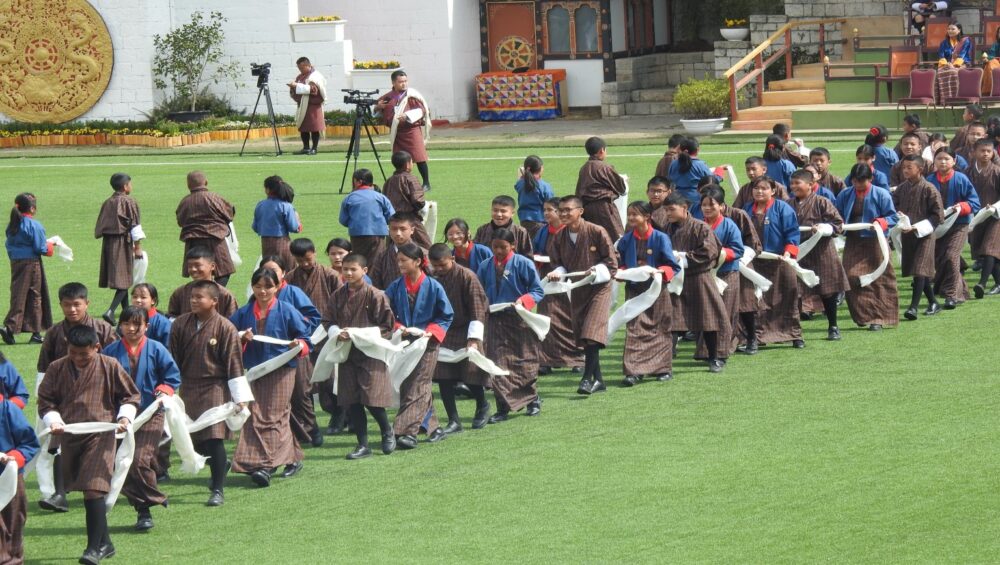
Traditional dress remains visible in everyday life, while Buddhist practices, architecture, textiles, festivals, and community traditions continue to shape modern Bhutan.
That is part of what makes traveling through Bhutan so distinctive.
When you respect local etiquette, you are not just avoiding mistakes. You are creating opportunities for more genuine interactions with the people and places you encounter.
And those interactions can become some of the most memorable parts of your trip.
Planning a Bhutan Trip? Travel With Someone Who Understands the Culture
A knowledgeable local travel partner can make a major difference when visiting Bhutan for the first time.
From knowing how to behave inside monasteries to choosing the right time to visit festivals, villages, viewpoints, and cultural landmarks, local knowledge helps you experience Bhutan beyond the standard sightseeing checklist.
At Maebar Travel, our goal is to help travelers experience Bhutan with greater cultural understanding while making the journey comfortable, meaningful, and memorable.
Whether you’re planning a Bhutan cultural tour, honeymoon in Bhutan, family trip, photography journey, spiritual retreat, or Himalayan adventure, we can help you build an itinerary around the experiences that matter most to you.
Explore our Bhutan tour packages to find a journey that matches your interests and travel style.
Frequently Asked Questions About Bhutanese Etiquette
Do tourists have to wear traditional Bhutanese clothing?
No. Tourists are not generally required to wear Bhutanese national dress. However, modest clothing is expected and appreciated when visiting religious sites. Bhutan’s official tourism guidance recommends clothing that covers the shoulders and knees at places of religious significance.
What should tourists wear in Bhutan temples?
Wear clothing that covers your shoulders and knees. Long trousers, long skirts, dresses, and shirts with sleeves are good choices. You may also need to remove your shoes and hat before entering certain sacred areas.
Can I take photos inside Bhutanese monasteries?
Photography rules vary by location, but photography is not permitted in certain sacred interiors and altar rooms. Always ask your guide before taking photographs inside a temple or monastery.
Can I photograph Bhutanese people?
It is best to ask permission before photographing people. This is especially important when photographing monks, elders, people praying, festival participants, or people in private settings.
How do you say hello in Bhutan?
“Kuzu zangpo la” is a common way to say hello in Bhutan. “Kadrin chey la” means thank you.
What should I avoid doing in Bhutan?
Travelers should avoid disrespectful behavior at religious sites, photographing people without permission, touching sacred objects, speaking loudly in temples, littering, and interrupting religious ceremonies or prayers.
Do I need to know Bhutanese culture before visiting?
You don’t need extensive cultural knowledge before traveling to Bhutan. Learning a few basic customs, dressing respectfully, asking before taking photographs, and following your guide’s advice will help you travel respectfully.
Final Thoughts: Travel Bhutan With Respect
Bhutan rewards travelers who are willing to slow down, observe, and appreciate the culture around them.
The most important Bhutanese etiquette rules for travelers are surprisingly simple: dress respectfully, ask before taking photographs, be quiet around sacred places, respect religious objects and traditions, protect the environment, and treat local people with the same courtesy you would expect from visitors to your own home.
You don’t have to be perfect.
You simply have to be respectful, curious, and willing to learn.
And that is often the best way to experience the Land of the Thunder Dragon.
Let Maebar Travel help you turn your trip into a meaningful journey—not just a sightseeing tour.
[Start Planning Your Bhutan Adventure →]