Bhutan is a country that is best experienced slowly. From its mountain valleys and ancient monasteries to its villages, festivals and warm hospitality, every part of a journey reveals something about the country’s unique way of life.
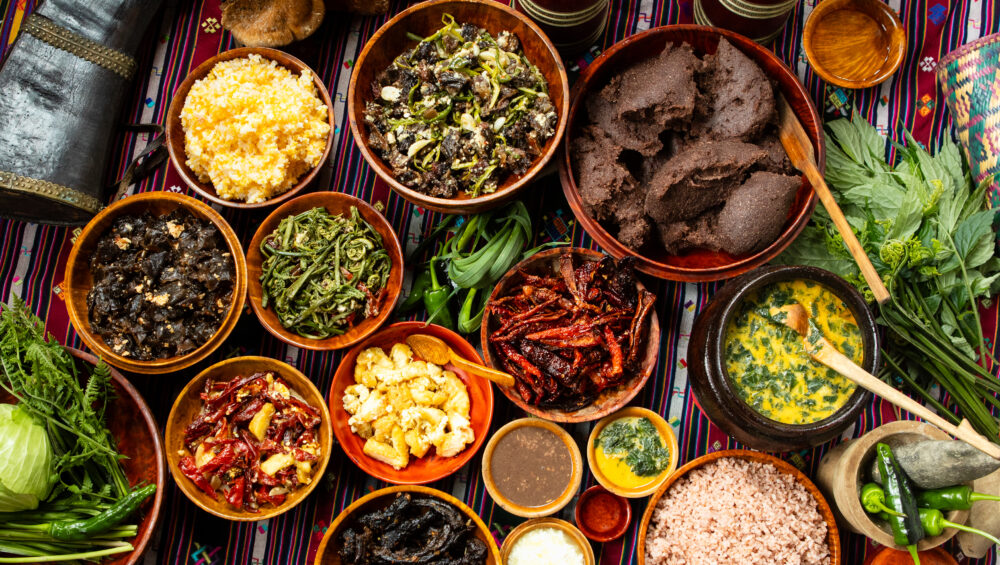
And food is no exception. Bhutanese cuisine is simple, hearty, flavorful and deeply connected to the land. Rice is a staple, chillies are an essential part of everyday cooking, and cheese, vegetables, buckwheat and locally raised meats feature prominently in traditional meals.
For travelers, discovering Bhutanese food is not simply about trying something new. It is an opportunity to experience the country’s culture and traditions in a very personal way—whether sharing a meal with a local family, enjoying a traditional farmhouse lunch or sitting down to a steaming bowl of Ema Datshi after a day in the mountains.
If you are planning a trip to Bhutan, here are 15 traditional Bhutanese foods and drinks worth trying.
1. Ema Datshi – Bhutan’s Most Famous Dish
No introduction to Bhutanese food is complete without Ema Datshi.
Often described as Bhutan’s national dish, Ema Datshi is a comforting combination of chillies and cheese cooked together to create a rich, flavorful dish. It is traditionally eaten with rice and is found throughout Bhutan, from family kitchens to local restaurants.
The remarkable thing about Ema Datshi is how much it can vary. Some versions are mild and creamy, while others are packed with fiery chillies.
And yes, Bhutanese people really do eat a lot of chillies.
For first-time visitors, Ema Datshi is often the dish that best captures the character of Bhutanese cooking—simple ingredients, bold flavors and plenty of warmth.
Our tip: If you are not accustomed to spicy food, ask for a milder version. You can always add more chilli later!
2. Kewa Datshi – Potatoes, Cheese & Chilli
If you enjoy creamy and comforting food, Kewa Datshi is an excellent choice.
“Kewa” means potato, while “Datshi” refers to cheese. Thinly sliced potatoes are cooked with cheese and chilli to create a simple but delicious dish that pairs wonderfully with Bhutanese red rice.
Compared with Ema Datshi, Kewa Datshi is often a little easier for visitors who are still getting used to Bhutan’s love of chilli.
It is also a wonderful example of traditional Bhutanese cooking: everyday ingredients transformed into something deeply satisfying.
3. Shakam Datshi – Dried Beef with Cheese
For meat lovers, Shakam Datshi brings together two familiar elements of Bhutanese cuisine—dried beef and cheese.
The beef is cooked with cheese and chilli, creating a rich and hearty dish that goes particularly well with rice.
Dried meat has traditionally been an important way of preserving food through Bhutan’s colder months, and dishes such as Shakam Datshi offer travelers a glimpse into traditional food practices that developed around Bhutan’s mountain environment.
4. Phaksha Paa – Pork with Red Chillies
Phaksha Paa is a traditional pork dish with plenty of character.
Pork is cooked with dried red chillies and often accompanied by vegetables such as radish or leafy greens. The result is a hearty dish with a deep, savory flavor and the unmistakable warmth of Bhutanese chilli.
It is particularly enjoyable on cooler days when you have been exploring Bhutan’s mountain roads and valleys.
Served with rice, Phaksha Paa makes a filling traditional meal.
5. Jasha Maru – Bhutanese-Style Chicken
Jasha Maru is a flavorful chicken dish made with ingredients such as tomatoes, onions, garlic, ginger and chillies.
Unlike some of the richer cheese-based dishes, Jasha Maru has a lighter, more aromatic character while still retaining the bold flavors associated with Bhutanese cuisine.
It is commonly served with rice and is a good choice for travelers who want to explore local flavors without starting with the strongest chilli dishes.
6. Shakam Paa – Traditional Dried Beef
Another traditional meat dish worth looking for is Shakam Paa.
Made with dried beef and cooked with chilli and vegetables, this dish reflects Bhutan’s long tradition of preserving meat for later use.
The texture and flavor are quite different from freshly cooked beef, which makes Shakam Paa particularly interesting for travelers who want to experience traditional Bhutanese cuisine rather than simply familiar dishes prepared in a local style.
7. Momo – Bhutanese Dumplings
You may already know momos from other parts of the Himalayas, but they are still an essential food to try while traveling through Bhutan.
These steamed dumplings are made with different fillings, including meat, vegetables and cheese. They can be enjoyed as a snack, a light meal or shared around the table with friends and family.
Momos are particularly popular with travelers because they are familiar enough to be approachable while still offering plenty of local variations.
If you see cheese momos on a menu, give them a try.
8. Hoentay – Traditional Buckwheat Dumplings
If you travel through the Haa Valley and other parts of western Bhutan, keep an eye out for Hoentay.
These traditional dumplings are made using buckwheat flour and filled with ingredients such as local greens, cheese and other flavorful ingredients.
Hoentay are particularly associated with the Haa region and are a wonderful example of how Bhutanese cuisine changes from one valley to another.
Trying regional dishes like Hoentay is one of the pleasures of traveling beyond Bhutan’s most familiar tourist routes.
9. Puta – Buckwheat Noodles from Bumthang
Travel to Bumthang, and you will discover a different side of Bhutanese cuisine.
One of the region’s specialties is Puta, traditional noodles made from buckwheat.
Buckwheat has long been an important crop in the Bumthang region, and it appears in many traditional dishes. Puta can be prepared in different ways and makes a wonderful alternative to rice.
For travelers interested in discovering the regional diversity of Bhutanese food, Bumthang is a particularly rewarding destination.
10. Khurle – Traditional Buckwheat Pancakes
Another Bumthang specialty is Khurle, a traditional pancake made from buckwheat.
Khurle is commonly enjoyed with other local dishes and is especially associated with the food traditions of central Bhutan.
It may look simple, but foods like Khurle tell an important story about Bhutan. Local cuisine has traditionally developed around what communities could grow and produce in their own valleys.
That connection between food and landscape remains one of the most fascinating aspects of traveling through Bhutan.
11. Goep – For the Adventurous Food Traveler
For those who like trying something different, Goep is worth seeking out.
Goep is made from tripe and is generally cooked with chilli and other ingredients to create a flavorful local dish.
It is not necessarily something you will find on every restaurant menu, but when you come across it, it can be an interesting opportunity to step outside familiar foods and experience a more traditional side of Bhutanese cuisine.
Traveling is, after all, partly about trying something you have never tasted before.
12. Jaju – A Comforting Bhutanese Soup
After a long day of sightseeing, hiking or traveling through Bhutan’s mountain roads, a warm bowl of Jaju can be particularly comforting.
Jaju is a traditional milk-based soup prepared with vegetables and other simple ingredients. It is mild compared with many Bhutanese dishes and provides a pleasant balance alongside spicier foods.
For visitors who find Bhutanese chilli a little intense, Jaju can be a welcome addition to the table.
13. Ezay – Bhutan’s Favourite Chilli Relish
If you think you have tried enough chilli after Ema Datshi, wait until you encounter Ezay.
Ezay is a traditional Bhutanese chilli relish or condiment that accompanies many meals. Recipes vary between households, but ingredients can include fresh or dried chillies, tomatoes, onions and other local seasonings.
A little Ezay can completely transform a meal.
And a word of advice: start with a small amount.
Bhutanese standards for “spicy” can be very different from what many international travelers are accustomed to!
14. Bhutanese Red Rice
Although red rice is not a dish by itself, it deserves a place on any Bhutanese food list.
This traditional rice is grown in Bhutan’s valleys and is a staple accompaniment to many local dishes. It has a distinctive color, slightly nutty flavor and satisfying texture.
You will often find it served alongside Ema Datshi, meat dishes, vegetables and other traditional preparations.
For many visitors, a simple bowl of Bhutanese red rice with Ema Datshi becomes one of the defining tastes of their trip.
15. Zow – A Traditional Puffed Rice Snack
For something simple and traditional, try Zow, a puffed-rice snack enjoyed in Bhutan.
It is often eaten casually with tea or incorporated into snacks and local preparations.
Zow may not be as famous as Ema Datshi or momos, but that is precisely what makes these everyday foods interesting. They offer a glimpse into the ordinary side of Bhutanese life—the food people have enjoyed at home for generations.
What Do People Drink in Bhutan?
Food is only part of the Bhutanese culinary experience. Traditional drinks also play an important role in hospitality and everyday life.
Suja – Bhutanese Butter Tea
One of the most distinctive drinks you may encounter is Suja, or Bhutanese butter tea.
Unlike the sweet milk tea familiar in many parts of the world, Suja is traditionally made with tea, butter and salt. It is rich, warming and particularly suited to Bhutan’s cold mountain climate.
The first taste may surprise you. But don’t be afraid to try it. Food and drink are an important part of experiencing Bhutanese hospitality, and being offered tea is often an invitation to slow down and share a moment with others.
Ngaja – Sweet Milk Tea
If you prefer something more familiar, Ngaja, a sweet milk tea, is a much easier introduction.
Tea is deeply woven into Bhutanese hospitality, and you may encounter it during meals, visits to local homes or time spent with Bhutanese families.
Ara – Traditional Bhutanese Alcohol
Ara is a traditional alcoholic drink made from grains such as rice, wheat, maize, millet or barley.
It is particularly associated with traditional and rural communities and can be prepared in different ways.
For visitors, trying Ara can offer another small glimpse into Bhutan’s traditional food and drink culture.
Is Bhutanese Food Very Spicy?
The short answer is: yes, it can be!
Chillies are an essential part of Bhutanese cuisine. In many dishes, they are not simply used to add heat—they are treated almost like a vegetable.
This is one of the biggest differences many travelers notice when they first experience Bhutanese food.
If you love spicy food, you are going to have a wonderful time.
If you don’t, there is no need to worry.
Hotels and restaurants that regularly welcome international travelers can usually adjust the level of chilli. Your local guide can also help you choose dishes that suit your taste.
The best approach is simply to tell your guide what you enjoy.
Where Can You Experience Authentic Bhutanese Food?
Some of the best food experiences in Bhutan happen away from formal restaurants.
During your journey, you may have the opportunity to enjoy a meal at:
- A traditional Bhutanese restaurant
- A local farmhouse
- A village home
- A family-run guesthouse
- A local market
- A homestay
- A traditional festival
A farmhouse meal can be particularly memorable.
Sitting down with a local family, eating food prepared from ingredients grown nearby and sharing conversation over a cup of tea gives you something that a restaurant simply cannot provide.
It allows you to experience Bhutan not just as a destination, but as a place where people live, work, cook and share meals every day.
Bhutanese Food Changes From Region to Region
One of the most rewarding aspects of traveling through Bhutan is discovering that food changes with the landscape.
In western Bhutan, you may encounter dishes such as Hoentay and different variations of Datshi.
In central Bhutan, particularly around Bumthang, buckwheat becomes much more prominent, with foods such as Puta and Khurle reflecting the region’s agricultural traditions.
As you travel farther east, you will discover additional regional dishes and ingredients that are less commonly found on menus in the main tourist centers.
This is one reason we encourage travelers not to rush through Bhutan.
Every valley has its own character—and sometimes its own taste.
Eating in Bhutan Is Part of the Experience
One of the wonderful things about Bhutanese food is that it does not try to be complicated.
It is built around simple ingredients, traditional cooking methods and flavors that have been passed from one generation to the next.
A bowl of Ema Datshi may seem simple. A plate of red rice may seem humble. A cup of butter tea may taste unfamiliar.
But when enjoyed in the right setting—perhaps overlooking a valley, sitting inside a traditional farmhouse or sharing a meal with a Bhutanese family—these foods become part of the story of your journey.
That is what makes eating in Bhutan so memorable.
You are not simply tasting food.
You are experiencing a part of Bhutanese life.
Discover Bhutan Through Its Food
At Maebar Travel, we believe that experiencing Bhutan goes far beyond visiting its famous landmarks.
As a locally owned Bhutanese tour operator, we create journeys that allow travelers to experience the country’s culture, traditions, landscapes, food and people at a more personal level.
Whether you want to explore Bhutan’s famous monasteries, discover traditional villages, enjoy local cuisine, attend a vibrant festival or venture into lesser-known valleys, we can create a journey around the experiences that matter to you.
Come hungry, travel slowly, and let Bhutan surprise you.
Ready to experience Bhutan for yourself?
Explore our Bhutan tours or contact Maebar Travel to create your tailor-made Bhutan journey.